

Wrangell-St. Elias National Park
At 13 million acres, Wrangell-St. Elias National Park and Preserve is the largest national park in the U.S., and with its high peaks and massive glaciers, it is also one of the most spectacular. Wrangell-St. Elias stretches from one of the tallest peaks in North America, Mount St. Elias at 18,008 feet, out to the ocean on the Gulf of Alaska.
Best time to visit: May to September
Entry fee: Free
Visitor Centers: Wrangell-St. Elias Visitor Center, Kennecott Visitor Center, Slana Ranger Station, Chitina Ranger Station, Yakutat District Office
Things to do: Mining history, hiking, wildlife viewing, backpacking, rafting, camping, glacier trekking, fishing, mountaineering, flightseeing, interpretive programs
Types of wildlife: Dall sheep, mountain goats, caribou, moose, bears, and more
Lodging: Cabins, wilerness lodges, backcountry camping
Things to Do
Due to its sheer size and mountainous terrain, access to much of Wrangell-St. Elias National Park and Preserve is limited to adventurers who fly into the park for backcountry hiking, mountaineering, and rafting. Most visitors to the park arrive through the town of McCarthy to visit the ghost town of Kennecott Mines National Historic Landmark for mining history and hiking.
While Wrangell-St. Elias is one of only three national parks in Alaska accesible by road, services are limited when compared to other major parks like Denali National Park. Visitors who are willing to put in the extra time and effort to access this spectacular national park will find endless opportunities for hiking, camping, rafting, glacier trekking, wildlife viewing, and stepping back in time into Alaska’s mining history.
Driving to Wrangell-St. Elias National Park
Visitors who want to explore the park from the road system have three main access points: the Wrangell-St. Elias Visitor Center on the west side of the park in Copper Center, the Nabesna Road on the north side of the park, and driving the McCarthy Road to McCarthy / Kennicott in the center of the park. Each area offers its own unique set of experiences and adventures. Please note that most rental car companies don't allow you to drive the McCarthy Road, so be sure to check policies beforehand.
McCarthy Road & McCarthy
One of the most popular areas in Wrangell-St. Elias National Park is Kennecott Mines National Historic Landmark and the nearby town of McCarthy. From Chitina, the McCarthy Road travels 60 miles along a mostly dirt road through the heart of Wrangell-St. Elias National Park to the quirky town of McCarthy. Driving the scenic McCarthy Road usually takes about two hours, but most rental car companies don’t allow rentals on this road due to the rough conditions. Air charter operators in Chitina offer 30-minute flights to McCarthy for those that are not able to drive.
The McCarthy Road ends at the Kennicott River, where visitors can take a footbridge across the river and then walk, bike, or catch a shuttle to the small own of McCarthy, ½ mile away. McCarthy is the jumping off point for adventures into the park, with several outfitters offering guided hiking, rafting, glacier trekking, flightseeing, and camping trips into the park.

Kennecott Mines National Historic Landmark
From McCarthy, visitors can catch a shuttle van for the five mile ride out to Kennecott Mines National Historic Landmark, the site of a historic copper mine that was in operation from 1911–1938. The National Park Service offers guided tours of the huge mill building, bunkhouses, a train depot, worker's cottages, and the power plant. The white-trimmed red buildings stand out against the dramatic mountain-and-glacier backdrop at the mine site. A lodge and restaurant are located in this historic area, featuring breathtaking views of the Root Glacier and mountains.
Just beyond Kennecott Mine is access to several hiking trails, including the Root Glacier Trail, which leads directly to the surface of the Root Glacier, and the Jumbo Mine and Bonanza Mine Trails which climb steeply to fascinating mine ruins perched high in the mountains.

Nabesna Road
The north end of the park can be explored by driving the Nabesna Road, a 42-mile unpaved road that starts at Mile 60 of the Glenn Highway, about an hour south of Tok. The Nabesna Road is nestled in a valley with views of the Wrangell, Mentasta, and Nutzotin Mountains. The road provides access to several hiking trails, campgrounds, public use cabins, and wildlife viewing opportunities. The drive takes about 1.5 hours one-way, and visitors should be prepared for rough road conditions and creek crossings. The Slana Ranger Station is located at the start of the Nabesna Road and is a great place to stop before venturing down the road. At the end of the road is a privately-owned lodge and access to the Rambler Mine Trail.
Hiking in Wrangell-St. Elias National Park
There are few maintained hiking trails in Wrangell-St. Elias, but the park is laced with old mining roads, historic horse trails, and other avenues to its interior. Many trails require bush-plane travel to reach their remote locations, but several established trails are located along the road system into the park from the McCarthy Road and the Nabesna Road. The most popular hiking trails within the park start at Kennecott Mines National Historic Landmark, including the Root Glacier Trail, and the Jumbo Mine Trail, and the Bonanza Mine Trail.
Backcountry Adventures
A wide variety of outfitters offer guided multi-day backcountry trips into the park that include a combination of camping, hiking, rafting and packrafting, mountaineering, ice climbing, glacier trekking, hunting, fishing, and wildlife viewing. Experienced independent adventurers can arrange flights with air-charter operators to be dropped off and picked up in the park for endless opportunities for exploration.

Wildlife Viewing
Wildlife is abundant in Wrangell-St. Elias National Park and Preserve and includes Dall sheep and mountain goats in the alpine region, caribou around the Wrangell Mountains to the north, and moose in the bogs and brushy areas of the lowlands. Bison were released in Copper River Valley in 1950 and along the Chitina River in 1962, and remnants of those herds remain today. Black and brown bears roam throughout the park.
Landscape
Wrangell-St. Elias National Park and Preserve is often called “the mountain kingdom of North America,” as the Chugach, Wrangell, and St. Elias Mountains and the Alaska Range converge in an area the size of six Yellowstone National Parks. The St. Elias Range merges with the Wrangells in the heart of the park and then arcs eastward past the Canadian border, where it forms the highest coastal range in the world.
Within the park's borders are nine of the sixteen highest peaks in the country, including the second highest, Mount St. Elias at 18,008 feet, Mount Bona at 16,421 feet, Mount Blackburn at 16,390 feet, and Mount Sanford at 16,237 feet. From its glaciated roof of mountains and peaks, the park's terrain descends to the north as treeless tundra and then boreal-forested uplands. To the south, the glaciers extend from the mountains almost to the tidewaters of the Gulf of Alaska.

History of Wrangell-St. Elias National Park
After copper was discovered in the area in 1900, a group of wealthy investors formed the Kennecott Copper Corporation, named when a clerical worker misspelled Kennicott. The corporation built the Copper River and Northwest Railroad, including its famous Million Dollar Bridge, and established the company town of Kennicott. From 1911-38, the mine made more than $200 million from some of the richest copper veins the country has ever known.
Since no gambling or drinking were allowed at the company town, the town of McCarthy quickly sprang up nearby as a place where miners would find 'wine, women, and song' in its saloons, restaurants, hotels, and pool halls. A number of the buildings from that era still stand in both Kennicott and McCarthy, making the area the best remaining example of early 20th century copper mining.
Designated as a national park in 1980, Wrangell-St. Elias sprawls across 13.2 million acres in the Southcentral region of Alaska. The park borders Canada's Kluane National Park and together their 20 million acres represent one of the largest wilderness areas left in the world. For this reason, the two parks were recognized by the United Nations as a World Heritage Site in 1979.

Visitor Centers
Wrangell-St. Elias National Park and Preserve has six visitor centers: the Wrangell-St. Elias Visitor Center at mile 106.8 of the Richardson Highway, the Slana Ranger Station at the beginning of the Nabesna Road, the Chitina Ranger Station at the beginning of the McCarthy Road, the McCarthy Road Information Station at mile 58.6 of the McCarthy Road, the Kennecott Visitor Center in Kennecott Mines National Historic Landmark, and the Yakutat District Office in Yakutat. The two main visitor centers are the Wrangell-St. Elias Visitor Center and the Kennecott Visitor Center.
Wrangell-St. Elias Visitor Center
The park’s main visitor center is the Wrangell-St. Elias Visitor Center at Mile 106 of the Richardson Highway, near the town of Copper Center. The center features a theater, natural history exhibits, a bookstore, and a large interactive map display. Next to the visitor center is the Ahtna Cultural Center, housing exhibits, a museum, and information on the Ahtna Athabascan people. Outside of the visitor center, a short nature trail leads to spectacular views of the Wrangell Mountains.
Kennecott Visitor Center
The park's Kennecott Visitor Center is located in the historic train depot, where visitors can pick up maps and brochures, check out historical displays, or join a ranger-led history walk of the ghost town and mine buildings.
Where to Stay in Wrangell-St. Elias National Park
Hotels & Wilderness Lodges
Most visitors to Wrangell-St. Elias National Park stay in hotels, wilderness lodges, and vacation rentals located in McCarthy and along the Nebesna Road. There is one wilderness lodge located in Kennecott Mines National Historic Park, along with a fly-out backcountry wilderness lodge in the park.
Additional hotels, campgrounds, and services can be found in nearby towns including Copper Center, Glennallen, Gakona, Chitina, and along the Edgerton Highway.
Public Use Cabins
There 14 public use cabins located within Wrangell-St. Elias. Most of the cabins are old mining, trapping, or hunting cabins and have been restored by the National Park Service. Almost all of the cabins are available on a first-come, first-served basis, and most of them are accessible only by a bush plane. Four cabins are reservable in advance and three are accessible by hiking from the road system. There are designated camping areas off the Nabesna Road.
Camping
Backcountry camping is permitted throughout the park. Several primitive campsites are located in pull-offs along the Nebesna Road. Additional privately-owned campgrounds are located off of McCarthy Road.
How to Get to Wrangell-St. Elias National Park
The Wrangell-St. Elias Visitor Center is 190 miles from Anchorage on the Glenn Highway, 250 miles from Fairbanks, and 110 miles from Valdez on the Richardson Highway.
Only two unpaved roads enter this massive park. The 42-mile Nabesna Road reaches the northern portion of the park and the 60-mile McCarthy Road leads directly into the heart of the park. Local air taxis and flightseeing tours into the park leave from airstrips in Glennallen, McCarthy, and Chitina.
For more information, visit the Wrangell-St. Elias National Park and Preserve website.
Plan Your Trip
Filter Your Trip
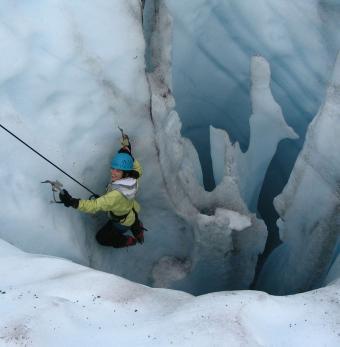
Whether you are interested in glacier hiking, ice climbing, backpacking, packrafting, alpine hikes or adventure packages we will help you plan...

Alaska Adventure Unlimited is a locally based Alaska tour company specializing in small-group, multi-day land tours. For more than 30 years, we...

From breathtaking scenic coach tours to the iconic Alaska Rail Road and self-drive packages – we have every option covered to complete your dream...

Kennicott Glacier Lodge is located in the center of Wrangell-St. Elias National Park at the National Historic Landmark of the Kennicott Copper...

Kennicott Glacier Lodge is located in the center of Wrangell-St. Elias National Park at the National Historic Landmark of the Kennicott Copper...
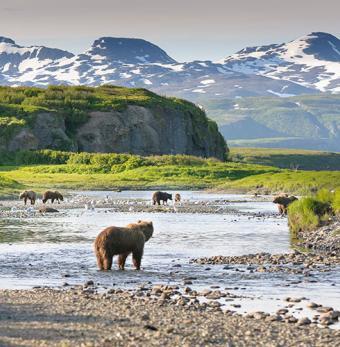
Alaska's wild beauty, abundant wildlife and colorful culture offer great appeal to those looking to travel off the beaten track on a self drive...
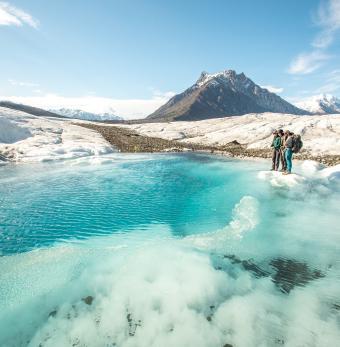
Whether you are interested in glacier hiking, ice climbing, backpacking, packrafting, alpine hikes or adventure packages we will help you plan...

Local Climate & Weather
For Alaska's day-to-day weather, it’s best to plan for a bit of everything. Learn more about weather in this area.