

The Significance of the Northern Lights to Alaska Native Peoples
For most visitors, the aurora borealis is a bucket-list item. The beautiful curtain of light rippling across a winter sky calls to us all. However, long before the northern lights became a tourism draw or something to post on social media, they meant something far more to the Indigenous peoples of Alaska. The qiuryaq (northern lights, Yup’ik) are woven into our cosmology, storytelling, and the relationship with our ancestors. Knowing that history adds context to a night of aurora watching while also reframing the experience from a photo opportunity into a window to a traditional way of understanding the sky.
Spirits in the Sky
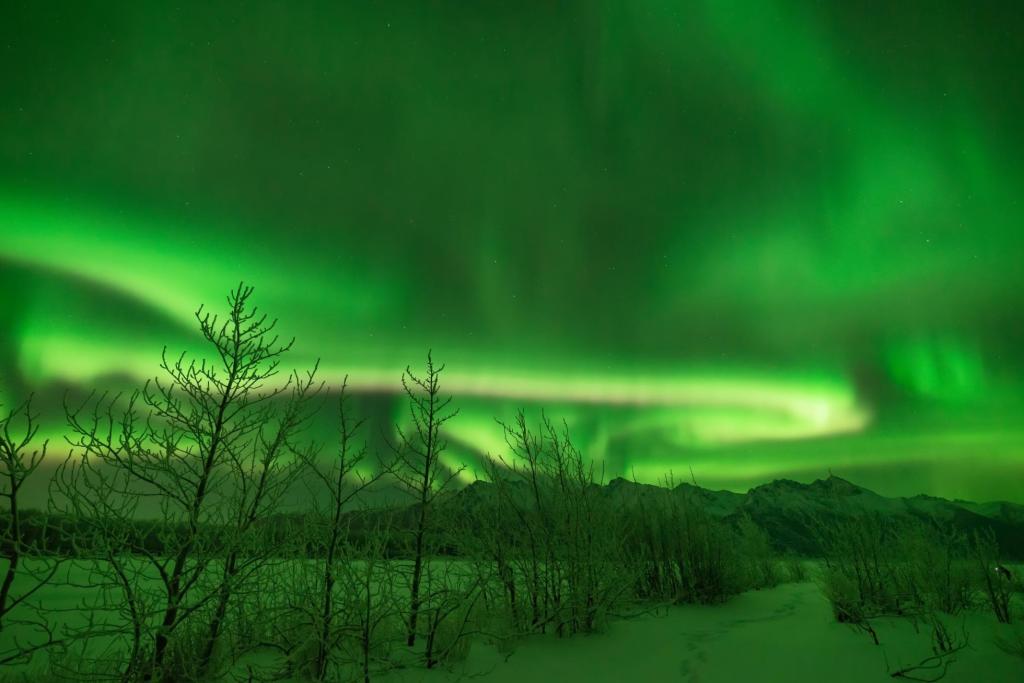
Across Alaska's Native cultures, one belief recurs in different forms: the aurora isn't merely light, it's alive. Iñupiat and Yup'ik traditions describe the lights as the spirits of our ancestors, dancing or playing games across the sky. In some tellings, those spirits are locked in a celestial ball game played with the skull of a walrus, the shifting, darting movement of the aurora explained as the back-and-forth of play. Along the lower Yukon River, some Yup'ik believed that the lights were the spirits of animals, deer, seals, salmon, beluga; their presence overhead reflecting the relationship between people and the animals that sustained us. Other traditions describe a different kind of afterlife entirely; rather than picturing a cold, empty one, the aurora was a reward.
In Southeast Alaska, Tlingit tradition similarly describes the gisʼóoḵ (northern lights, Łingít) as the dancing of human spirits, a belief shared by some neighboring peoples in eastern Canada. The specifics shift by region and nation, but the aurora was widely understood as a visible connection between the physical world and the spirit world, a reminder that our ancestors hadn't entirely left.
Not Always Benevolent
Not every tradition treated the lights as comforting, and I think that nuance often gets lost. Some Iñupiat communities, particularly around Utqiagvik, formerly known as Barrow, regarded the kiguġuyait (northern lights, Iñupiaq) with caution rather than wonder. Historical accounts describe people carrying knives when the lights appeared, a protective gesture against what was seen as a potentially dangerous force, and some traditions held that whistling at the aurora could draw it closer or bring harm, while a quieter response of whispering was thought to keep it at a respectful distance. This wariness shows up across many northern Indigenous cultures more broadly, where the aurora was treated as an active, unpredictable presence that demanded a certain etiquette from the people watching it.
Other traditions frame the lights as omens rather than threats. For some Yup'ik communities, the aurora's appearance could be read as a sign of good fortune, hardship, or a coming change in weather.
There was never one "Alaska Native belief" about the yikaih (northern lights, Gwich’in) in Alaska, but each is rooted in a specific people's relationship to their land, animals, and ancestors. Many of these stories are still told, still taught, and still carried by families and culture bearers across Alaska today. It is important to understand that beliefs varied village to village and evolved over generations, shaped by geography, contact with neighboring peoples, and the particular hardships of a place and time.
A Living Tradition
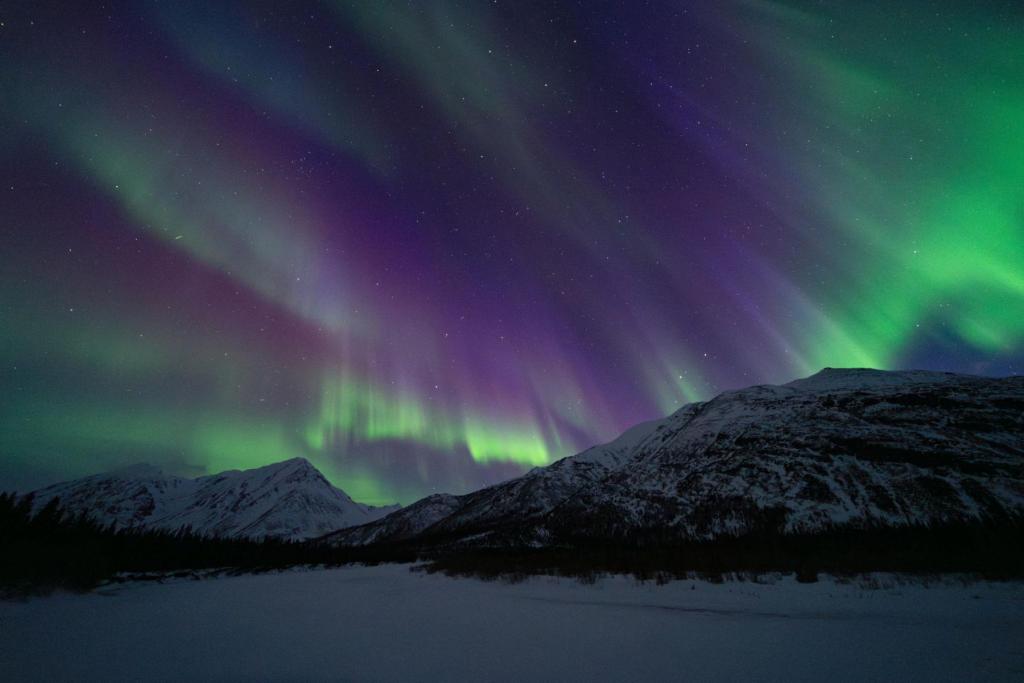
For Alaska Native communities, oral traditions like aurora legends are part of a larger, living body of knowledge, carried through storytelling. A story about spirits playing ball with a walrus skull isn't separate from the observation that the aurora's shifting brightness could signal a change in conditions worth paying attention to before a hunt. In a lot of Indigenous knowledge systems, spiritual understanding and practical knowledge were never fully separate categories.
That's part of why these traditions have endured, even alongside the very different explanation Western science offers for the same phenomenon: charged particles from the sun colliding with gases in the Earth's atmosphere, pulled toward the poles by the planet's magnetic field. Culture bearers across Alaska continue to teach both, often side by side, treating the scientific explanation and the traditional one as two different, equally legitimate ways of relating to the same sky.

What This Means for Travelers Today
The lights overhead have been watched, interpreted, feared, welcomed, and storied by Alaska's Indigenous peoples for as long as anyone can trace. Learning even a piece of that history turns aurora viewing from a checklist item into an encounter. You may find yourself watching the sky differently, less like a photo waiting to happen, more like a story still being told.
Quyana (thank you, Yup’ik) for your willingness to learn about Alaska Native beliefs around qiuryaq. I hope you enjoy your trip to our beautiful state and that they dance for you.



New! Alaska Native Culture Guide
Immerse yourself in Alaska Native heritage and learn how to experience the living culture of the state's Indigenous peoples.