

An Insider's Guide to Visiting Wrangell-St. Elias National Park
Wrangell-St. Elias National Park is the largest national park in the United States, a remote place etched by history and defined by magnificent landscapes and offbeat communities. Glaciers cascade from towering mountains, historic mining towns preserve stories from the past, and wildlife sightings are common throughout the region. The park encompasses four mountain ranges and is home to nine of the sixteen tallest peaks in the United States. Though vast in scale, Wrangell-St. Elias welcomes visitors of all experience levels. With thoughtful planning, you can explore the park in just a few days, whether you’re drawn to scenic drives, rich history, or outdoor adventures.
Top Destinations in Wrangell-St. Elias National Park
Wrangell-St. Elias has limited road access, and most visitors focus on one or more of three main areas. Knowing how these regions differ can help you plan an itinerary that matches your interests and comfort level.
Copper Center
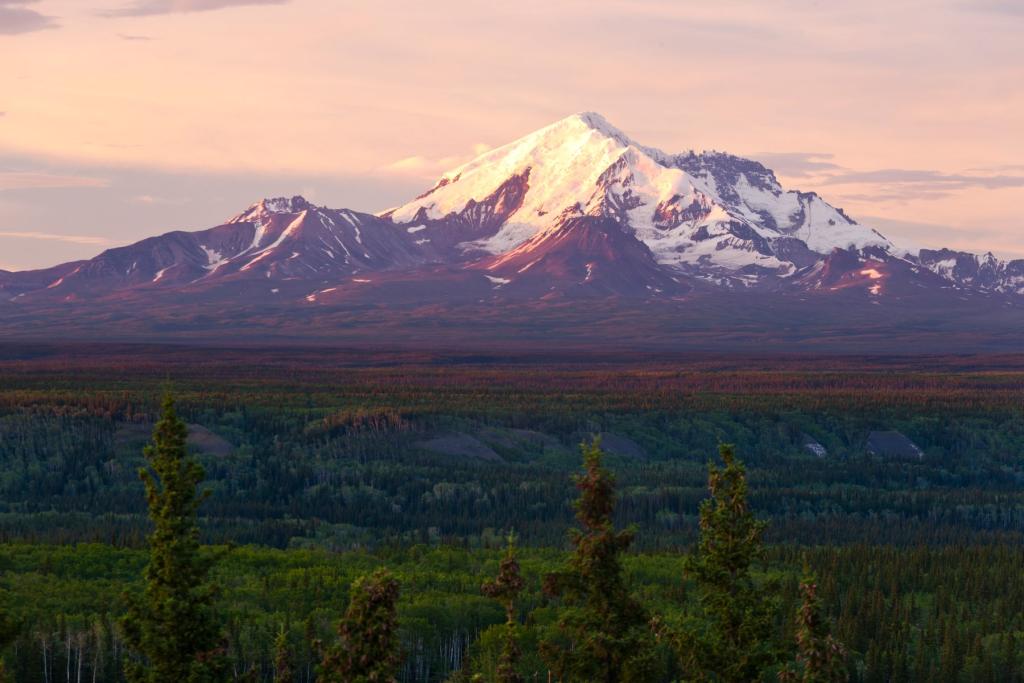
Copper Center is home to the park’s main visitor center, located just south of Glennallen on the Richardson Highway. This is the best place to start your visit, with exhibits, ranger programs, trail information, and up-to-date conditions. The area lies within the traditional homeland of the Ahtna Athabascan people, whose deep connections to the land continue today. Visit the Ahtna Cultural Center next to the visitor center to learn more. The surrounding area offers short hikes, and the best views of Mt. Sanford at 16,237 ft (4,949 m), Mt. Drum at 12,010 ft (3,660 m), Mt. Wrangell at 14,163 ft (4,317 m), and Mt. Blackburn at 16,390 ft (5,000 m) in that order, from left to right.
McCarthy and Kennicott
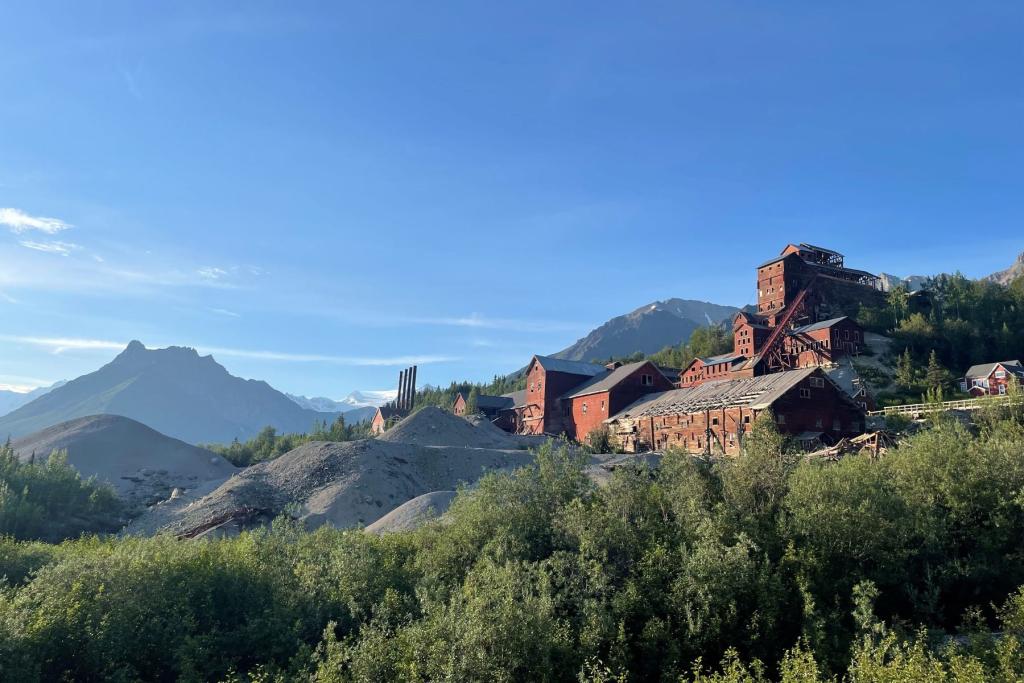
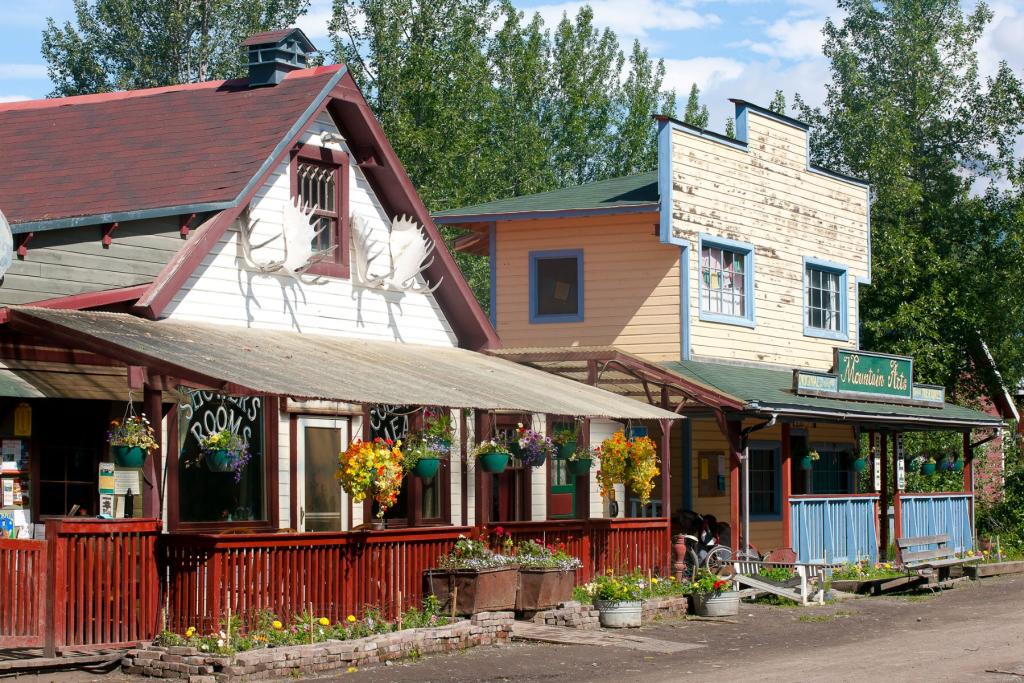
At the end of the 60-mile McCarthy Road, built mostly over the former Copper River and Northwestern Railway, the small towns of McCarthy and Kennicott sit within a historic mining district in a river valley surrounded by glaciers and dramatic peaks. Kennicott was a copper mining company town, while McCarthy developed nearby as a support community where miners spent their hard-earned dollars to unwind. Today, the area blends history with a creative, close-knit year-round community. Visitors come for guided mill tours, glacier hikes, flightseeing, and a range of dining and lodging options. You’ll notice two different spellings: Kennicott and Kennecott. Kennicott refers to the mining town, the glacier, and the river, named after naturalist Robert Kennicott. Kennecott refers to the mining company, a result of a clerical error when the company was formed.
Nabesna Road
On the north side of the park, the 42-mile Nabesna Road begins near the Slana Ranger Station and travels through lands traditionally used by Upper Tanana Athabascan people. This gravel road passes lakes, volcano views, wildlife habitat, and trailheads, offering a quieter, self-guided way to explore the park. Visitors can explore remains from two mines in this region and see historic homesteads along the route. Travelers can relax in two lodges spaced on the Nabesna Road.
Getting There
Distances in Wrangell-St. Elias are long, travel is slow, and services are limited. Glennallen is the last reliable place for fuel, groceries, and supplies before heading deeper into the park. A spare tire, or a tire plug kit and basic tools, are strongly recommended for the gravel roads. Most car rental agencies do not allow their vehicles on these roads, but several do.
Cell service is extremely limited throughout the park. There is a working pay phone at the end of the McCarthy Road that operates without quarters, simply pick it up and dial.
Reaching McCarthy and Kennicott
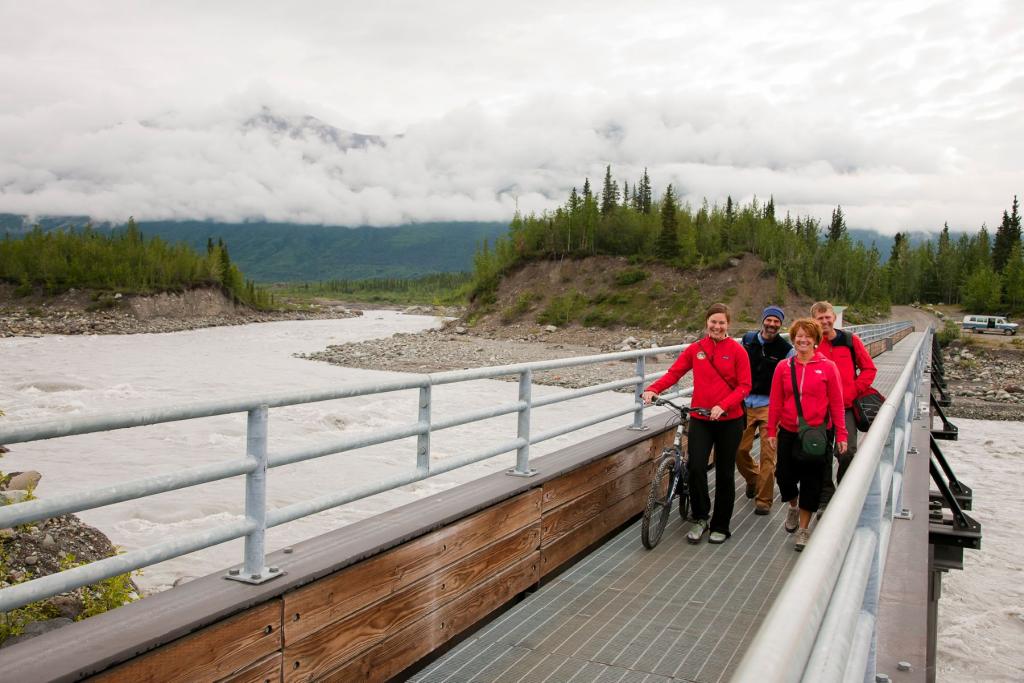
The McCarthy Road is narrow and requires slow, attentive driving. At the end of the road, vehicles cannot drive directly into McCarthy. Instead, park at the designated parking lot for a fee at the end of the road, cross the footbridge, and use the shuttle system, or ride a bicycle, to reach McCarthy (1/2 miles from footbridge) and Kennicott (5 miles from footbridge). E-bicycles are offered for rent at the footbridge. Carts are available to help haul luggage across the bridge.
Shuttle services also connect Anchorage, Chitina, McCarthy, and Kennicott. For those short on time, flights operate from Chitina, Gakona, and Anchorage into McCarthy.
Exploring Nabesna Road
Before heading down the 42-mile, mostly gravel Nabesna Road, stop at the Slana Ranger Station for current road and trail conditions, ranger-led activities, and an Alaska Geographic bookstore. After the first 15-miles of pavement, the road conditions begin to vary, and high-clearance or four-wheel-drive vehicles are often recommended, especially around June and beginning of July due to creek crossings.
Where to Stay
McCarthy and Kennicott
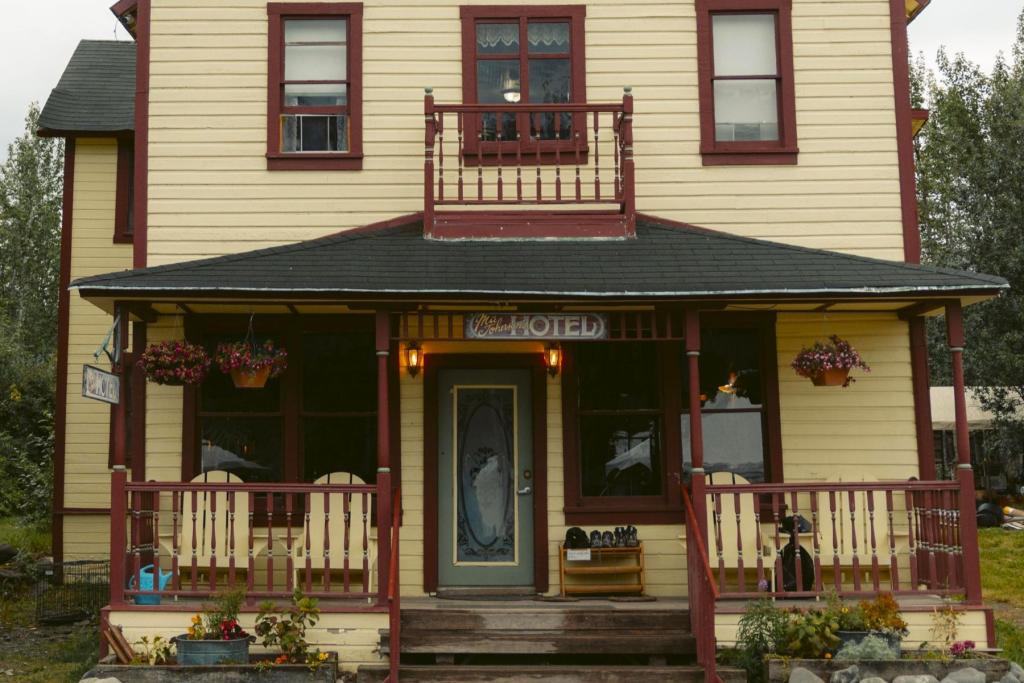
Lodging options include historic hotels, lodges, cabins, and vacation rentals in both McCarthy and Kennicott. Campers will find designated rudimentary campsites along the McCarthy Road and privately-owned campgrounds at the beginning and at the end of the road. There are several campsites with bear-safe metal storage boxes in the backcountry. The National Park service also maintains several public-use cabins that are accessible by hiking trails or via small bush planes.
Nabesna Area
Lodging along the Nabesna Road is limited and rustic, designed for travelers comfortable with remote travel and self-sufficiency. Visitors will find several campsites along the road, public-use historic cabins, and two privately operated lodges spaced along the road and near its endpoint. Kendesnii Campground at Mile Post 27.8 is the only NPS campground in the Park.
Bears are common throughout the park, so proper food storage and bear awareness are essential, regardless of where you stay.
What to Do in Wrangell-St. Elias National Park
Active Adventure
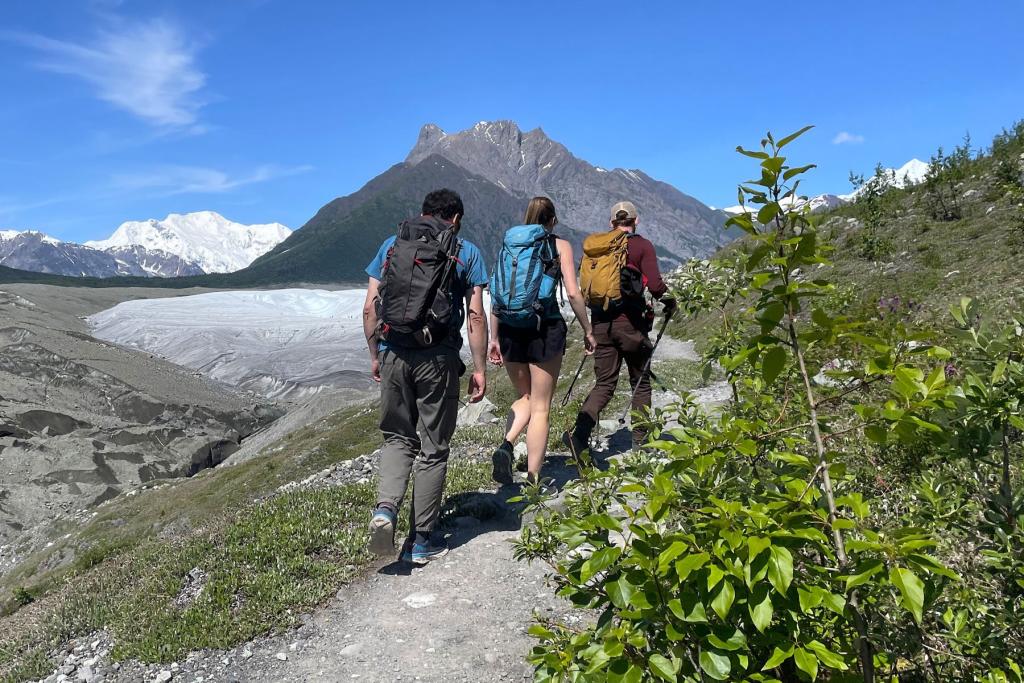
In McCarthy and Kennicott, popular activities include hiking on the Root Glacier, guided ice climbing, and exploring remnants of historic mines at the top of moderate to challenging trails such as Bonanza, Jumbo, Erie, and Green Butte. The area also offers rafting, pack-rafting, kayaking, and paddle boarding. Guided trips are strongly recommended for glacier travel and technical activities. Biking is a popular way to get around. The “Toe of the Glacier” is accessible by foot or bicycle and marks the glacier’s terminus, where icebergs float in glacial lakes and boulders occasionally tumble from the ice with a loud rumble into the water below.
Along Nabesna Road, highlights include the Skookum Volcano Trail with jaw-dropping volcanic landscapes during a moderate climb. The Caribou Creek Trail offers an easy to moderate scenic walk that can include creek crossings, wildlife sightings, and views of Mount Blackburn, with a rustic backcountry cabin as a turnaround point. Water-based adventure is also possible on sections of the Nabesna River accessible via side roads.
History and Culture
In McCarthy and Kennicott, visitors can take guided tours of the Kennicott Mill Town, attend ranger talks, or explore the McCarthy-Kennicott Historical Museum, which offers a self-guided “Then and Now” walking tour. The cemeteries in both towns provide quiet insight into the area’s past.
The Copper River & Northwestern Railway once connected the port town of Cordova to the Kennecott copper mines, hauling ore across glaciers, rivers, and rugged terrain between 1911 and 1938. Although the railroad is long gone, you will see remnants of it in the form of trestles, bridges, railroad spikes on the roads, sections of rail on the sides of the roads, and a locomotive turntable in McCarthy.
Dining in McCarthy and Kennicott ranges from refined meals at historic lodges to casual pub fare after a day of exploring. Despite their remote setting, the two towns offer a surprisingly diverse food scene that caters to everything from celebratory dinners to laid-back, post-adventure meals. Evenings in McCarthy are often community-driven, with open mic nights, Friday softball games, and live music on weekends.
Along Nabesna Road, history and culture are woven into the experience as well. After a scenic drive, travelers can settle in at a homestead at mile 28 with cozy cabins and yurts, Alaska-sourced meals surrounded by lakes, mountains, and wildlife. At the end of the road, a lodge offers a similarly welcoming stop. Out on the trail, the region’s past comes into focus on short hikes like the Rambler Mine Trail, which follows an old mining route to weathered buildings, or during a visit to the Nabesna Mine, where discovery of gold led to the road’s construction.
Wrangell-St. Elias National Park rewards visitors who take the time to understand its scale and plan carefully. Whether you’re walking on a glacier, exploring a historic mining town, or driving a scenic gravel road with views of distant volcanoes, the park offers memorable experiences of Alaska’s most remarkable landscapes.

Alaska: AKA Your Next Adventure
Where will your Alaska adventure take you? Order our Official State of Alaska Vacation Planner and plot your course.