

How to Travel Alaska’s Inside Passage Independently
The Inside Passage is a protected coastal route that winds through the Alexander Archipelago, sheltered from the open Pacific by a maze of forested islands. The route connects Southeast Alaska communities that, in many cases, are inaccessible by road – including the state capital, Juneau.
Thanks to its incredible scenery, cultural and historical touchpoints, and opportunities for outdoor activities such as wildlife spotting and glacier viewing, the Inside Passage is a quintessential cruise ship journey. Tiered ships weave their way around the region’s foggy islands every summer, spilling thousands of passengers into major ports each day. But for those willing to dig a little deeper and travel Southeast Alaska independently, the Inside Passage opens up beyond a cruise itinerary.
Independent travel is possible here because there’s a solid transportation infrastructure that exists for residents. Long before cruise ships sailed these waters, Southeast Alaska was stitched together by ferries, floatplanes, and working harbors. Therefore, despite its remoteness, independent Inside Passage travel exists because it’s how locals move through the region. Independent travel offers a slower, more intimate way to experience this coastal rainforest of islands, fjords, and tidewater towns.

Where to Go
Key communities in the Inside Passage include Ketchikan, Wrangell, Petersburg, Sitka, Juneau, Skagway, and Haines, but you can visit dozens of other smaller communities that can’t support the infrastructure needed for cruise ships. Tenakee Springs, Gustavus, Pelican, Elfin Cove, and Kake are just a few more. On a map, distances between towns may appear short, but weather, tides, and ferry/flight schedules inform travel times and methods.
Wherever you go, plan for rain, cool temperatures even in midsummer, and, in June, July and August, daylight that stretches late into the night.

Getting Around
Ferry
The Alaska Marine Highway System (AMHS) is a water-based “highway” and is the backbone of independent travel in the Inside Passage. State-run ferries function as floating roads, carrying people, vehicles, and freight between coastal communities. You can even reserve a cabin on the boat and make the several-day journey from Bellingham, Washington, piecing together your own independent cruise itinerary. If you wish to book a cabin, do so early as they are limited. Many budget-conscious (and hardy) passengers set up tents on the deck of the ferry for overnight journeys.
Taking the ferry allows you more freedom than a cruise ship schedule, on which you may stop at a port for only a day or even a few hours. With the ferry, you can disembark directly into a town, stay as long as you want, and move on when you’re ready (or when the next ferry passes through).
Ferries run on fixed schedules that vary by season and route. Some sail overnight; others are short hops. You can travel as a foot passenger or bring a vehicle, though bringing a car is often unnecessary (and expensive) unless you’re continuing on the road system beyond Southeast Alaska.
Onboard, ferries are more utilitarian than luxurious, but you’ll still find plenty of amenities alongside camaraderie with other passengers spending multiple days aboard. There are lounges, observation decks, cafeterias, and a bar.

Flying
Flying is faster, but sometimes less predictable, than traveling the marine highway. Alaska Airlines jets connect larger towns, while smaller carriers operate floatplanes and bush planes between islands.
Flights can save time, especially for longer jumps like Sitka to Juneau, but weather delays can occur for smaller regional flights and air taxis. Watch the weather and assume that same-day changes may happen.
Many independent travelers mix ferries and flights, using each where it makes the most sense.
On Land
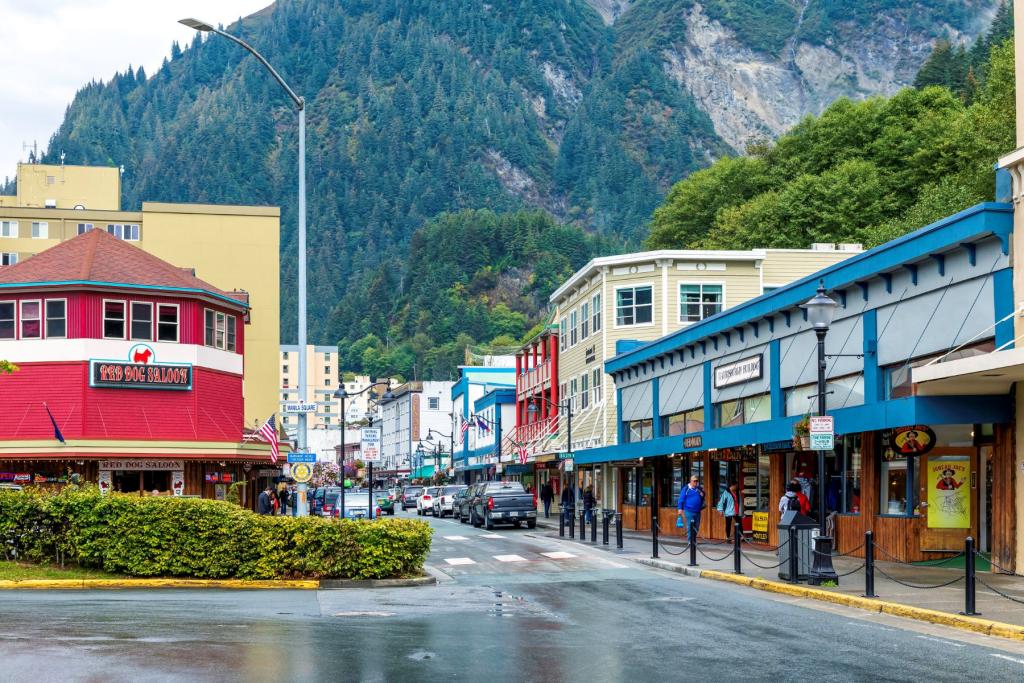
Once you’ve made it to a location, it’s fairly easy to get around, as most Southeast Alaska towns are compact. For example, you can walk nearly all of Ketchikan’s downtown, Sitka’s historic core, or Skagway’s entire main drag. Juneau is more spread out, but buses and taxis are reliable and its central downtown streets are still manageable on foot. Other small villages are easily walkable.
Car rentals are limited and often sell out in summer. Book ahead if you need one, but don’t assume you do. In many towns, trails, museums, harbors, and cafes are all within reach on foot.
Accommodations
Lodging in Southeast Alaska often skews small and locally owned. Expect independent hotels, family-run B&Bs, and simple lodges rather than chains (though you’ll find those in the larger towns). Hostels exist in a few communities, and camping is possible, often in forested campgrounds just outside town. This is bear country, even in more populated areas, so follow food storage rules.
Vacation rentals are varied and often excellent. As with ferry cabins and rental cars, you’ll want to book early for peak summer dates, or else travel in shoulder season for more flexibility and better rates.
When the cruise ships thrum out of town in the evenings, towns tend to feel quiet, social, and distinctly local. It’s a real treat to stay overnight.

What to Do
When creating an independent itinerary, your time is your own; you can build your schedule around weather, tides, and energy levels rather than cruise timetables and shore excursions. And many of the same excursions and tours available to cruise ship passengers can also be booked by independent travelers with a quick internet search or trip to a local tourist office.
In the Inside Passage, water-based adventures offer the most direct way to experience the region’s scale and beauty. Kayaking in particular is one of the best options for independent travelers, with outfitters offering half-day and multi-day trips in nearly every major town. Whale watching and chartered fishing trips are also widely available, while glacier excursions, especially in Glacier Bay National Park, provide close-up access to dramatic tidewater ice.

On land, you have a feast of outdoor options as well, including secluded hikes, cycling tours, and more glaciers. Hiking trails often start minutes from downtown; think rainforest loops, alpine ridges, and coastal bluffs. Museums and cultural centers, particularly those focused on Tlingit, Haida, and Tsimshian history, are perfect spots for unhurried visits.
When timing your travels, note that cruise ships typically arrive mid-morning and depart by early evening. Plan popular sites early or late, and you’ll often have them to yourself.

Cost, Time, and Planning
While independent travel is not automatically cheaper than cruising, you do have more control on how you spend. You pay for transportation, lodging, and food separately, which allows you to adjust your budget as you go.
Ferries are generally affordable, especially as a foot passenger, but flights can add up quickly. Lodging costs peak in July and August, while May, early June, and September offer better value with fewer crowds.
Most importantly, independent travel generally takes more time than cruising. Distances that take cruise ships a few hours can take much longer on your own, but that’s the point. If you value autonomy, flexibility, and depth over efficiency, independent travel here can be immensely rewarding.

Alaska: AKA Your Next Adventure
Where will your Alaska adventure take you? Order our Official State of Alaska Vacation Planner and plot your course.