
Kobuk Valley National Park
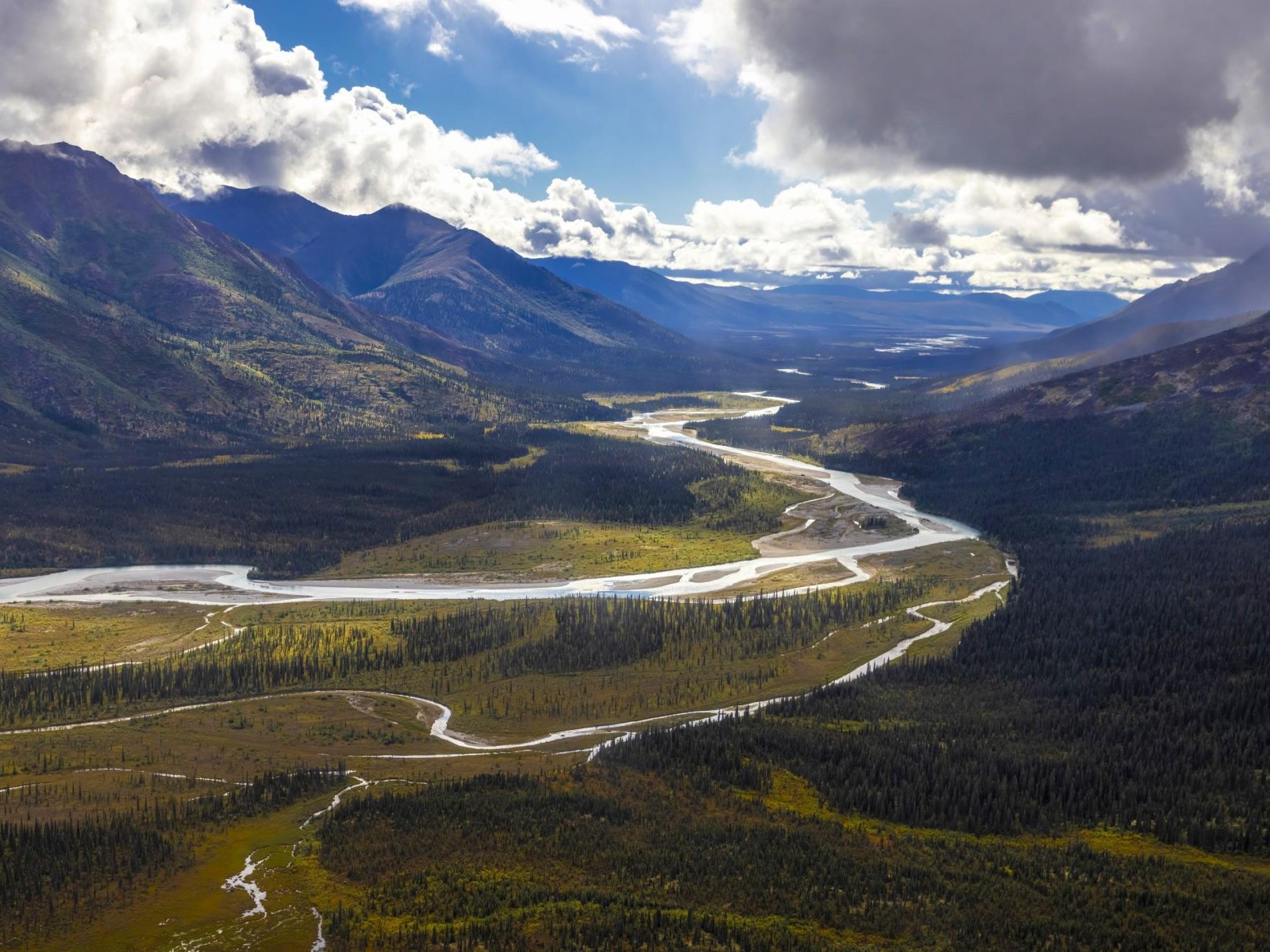
Kobuk Valley National Park is a 1.7-million-acre park in Arctic Alaska that occupies a broad valley where the middle section of the Kobuk River is encircled by the Baird and Waring Mountain ranges. Located 75 miles east of Kotzebue, this semi-enclosed bowl protects several unique geological features, including the Great Kobuk Sand Dunes, and is on the migration route of the Western Arctic caribou herd.
Best time to visit: June through August
Entry fee: Free
Visitor Centers: Northwest Arctic Heritage Center
Things to do: Backpacking, river float trips, flightseeing, and wildlife viewing
Types of wildlife: Caribou, moose, grizzly bears, foxes, arctic terns, and more.
Lodging: None
Things to Do
As one of the least visited national parks in the Alaska, Kobuk Valley National Park’s expansive, remote landscapes offer beauty and solitude for adventurous travelers looking to get far off the beaten track. Popular activities include backcountry treks, river float trips, fishing, and wildlife viewing.
Float Trips on the Kobuk River
The slow-moving Kobuk River offers extraordinary wilderness float trip opportunities through scenic boreal forests teeming with wildlife. Boaters can access the Salmon River by packing their boats from high mountain airstrips to the river's headwaters. Collapsible kayaks, collapsible canoes, and packrafts are recommended for the river's slow-moving waters.
Backcountry Hiking
There are no designated hiking trails or campgrounds within the park. The best backcountry hiking can be found in the mountains, with expansive views and more solid footing than the spongy lowland tundra. Popular areas to camp and explore on foot are the Great Kobuk Sand Dunes and Onion Portage, where the Western Arctic caribou herd migrates across the Kobuk River twice a year on their annual migration.
Flightseeing Trips
Flightseeing is another great way to take in the park’s unique sites and wildlife. Air charter companies in Kotzebue and Bettles offer flightseeing trips over the park, including options to land in the park for some up-close exploration.
Wildlife Viewing
The Western Arctic caribou herd, one of the the largest in Alaska at about 120,000 animals, travels through the park during its migration from its calving grounds on the northern slopes of the Brooks Range to its winter grounds south of the range. This 600-mile journey is one of the last great animal migrations left in the world. Other land animals in the park include moose, wolves, grizzly bears, foxes, wolverines, and porcupines. Millions of migratory birds spend summer months in the park including arctic terns, swans, cranes, geese, and ducks.
Landscape
Kobuk Valley sits in the transition zone between the boreal forest and the treeless Arctic tundra that extends westward to the Chukchi Sea. At its northern limit, the boreal forest is open woodland with small trees in a layer of thick tundra.
Great Kobuk Sand Dunes
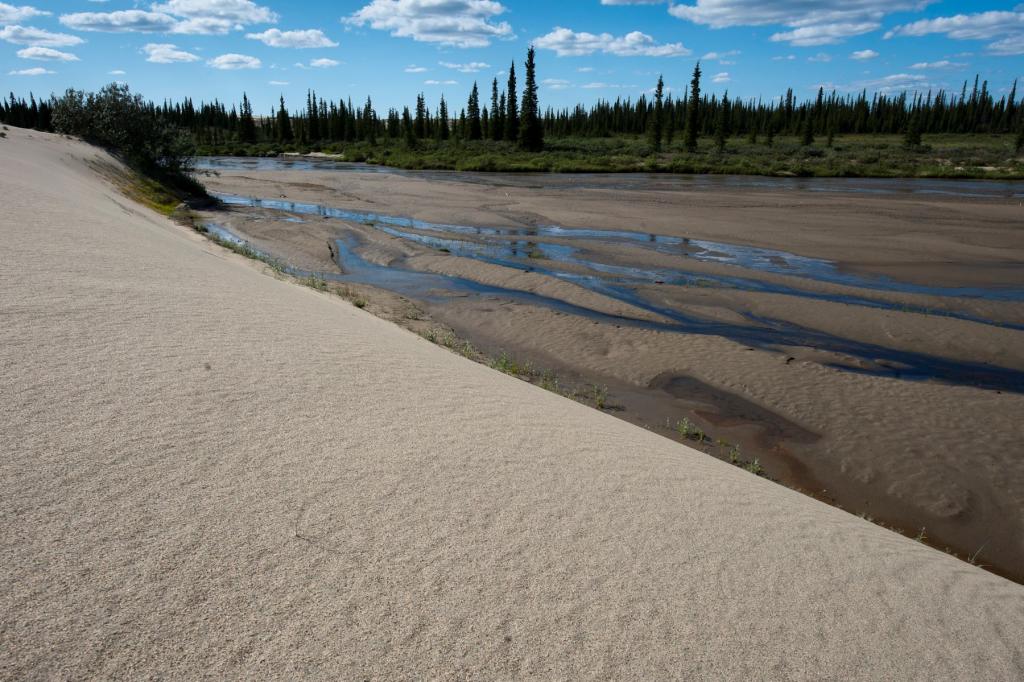
The 25-square-mile Great Kobuk Sand Dunes, Little Kobuk Sand Dunes near Onion Portage, and the Hunt River Dunes cover much of the southern Kobuk Valley. These are the largest active sand dunes found in the Arctic. Formed by the grinding action of glaciers, these wind-sculpted dunes rise as high as 100 feet and are stabilized by the area's vegetation. The dunes, accessible by a strenuous hour-long hike along Kavet Creek from the Kobuk River, lie 40 miles above the Arctic Circle, yet summer temperatures can soar to 100 degrees.
Kobuk & Salmon Rivers
A section of the Kobuk River runs through the park. Its bluffs, some of which stand more than 150 feet high, hold permafrost ice wedges and Ice Age mammal fossils. The Salmon River in Kobuk Valley National Park is a designated National Wild and Scenic River.

History of Kobuk Valley National Park
Kobuk Valley National Park is named after the Kobuk River valley, which runs through its center. "Kobuk" is an Inupiaq word meaning "big river."
Kobuk Valley National Park is home to the famous Onion Portage archaeological site, a National Historic Landmark and the cradle of the Arctic Woodland Culture defined by pioneering archaeologist J. Louis Giddings. At the site, Giddings and his crew found evidence of humans dating back 10,000 years, when people gathered to harvest caribou as they forded the stream. Today, local Alaska residents still feed their families with caribou from the river crossing in the fall.
The park was designated as National Park in 1980 to maintain the environmental integrity of the valley’s natural features in an undeveloped state and to protect and interpret important archaeological sites associated with Alaska Native cultures.
Visitor Center & Camping
There are no roads, campgrounds, or maintained trails within Kobuk Valley. Backcountry camping is permitted. Popular backpacking areas are at the Great Kobuk Sand Dunes and Onion Portage. The Northwest Arctic Heritage Center provides information on the park and is located in the town of Kotzebue.
How to Get to Kobuk Valley National Park
There is no road access to Kobuk Valley. Most visitors access the park by air taxi from Kotzebue or Bettles. In the summer, scheduled air service is available from Anchorage to Kotzebue and Fairbanks to Bettles. In the winter, access to the park is by plane, snowmobile, or dogsled.
For more information, visit the Kobuk Valley National Park website.

Local Climate & Weather
For Alaska's day-to-day weather, it’s best to plan for a bit of everything. Learn more about weather in this area.