

Katmai National Park and Preserve
Katmai National Park and Preserve is approximately 260 miles southwest of Anchorage and is a true wilderness destination. Some come for the otherworldly volcanic landscape of the Valley of 10,000 Smokes, but most come for bears. About 2,200 brown bears inhabit the park and many congregate on the Brooks River to gorge on summer salmon runs, making this one of the best spots for bear viewing in Alaska.
Best time to visit: mid-June through mid-September
Entry fee: Free
Visitor Centers: Brooks Camp Visitor Center, King Salmon Visitor Center, Robert F. Griggs Visitor Center (Valley of 10,000 Smokes)
Things to do: Bear viewing, fishing, hiking, camping, flightseeing, boating
Types of wildlife: Brown bears, wolves, lynx, caribou, wolverines, and resident and migratory birds
Lodging: Campground, wilderness lodges
Bear Viewing in Katmai National Park
Brooks Camp
The hub of bear viewing and other activities in the park is Brooks Camp, the park's summer headquarters on the shores of Naknek Lake. The camp features a lodge and restaurant, a campground, a small store, gear rentals (kayaks, canoes, fishing gear), and the Brooks Camp Visitor Center. Visitors to Brooks Camp are required to attend bear safety orientation at "Bear School" before exploring the area.
Brooks Falls Bear Viewing Platforms
From the Brooks Camp Visitor Center, a trail leads to the most popular attractions in the park: a series of bear viewing platforms overlooking the Brooks River. The viewing platform at Brooks Falls is a 1.2 mile walk from the Visitor Center.
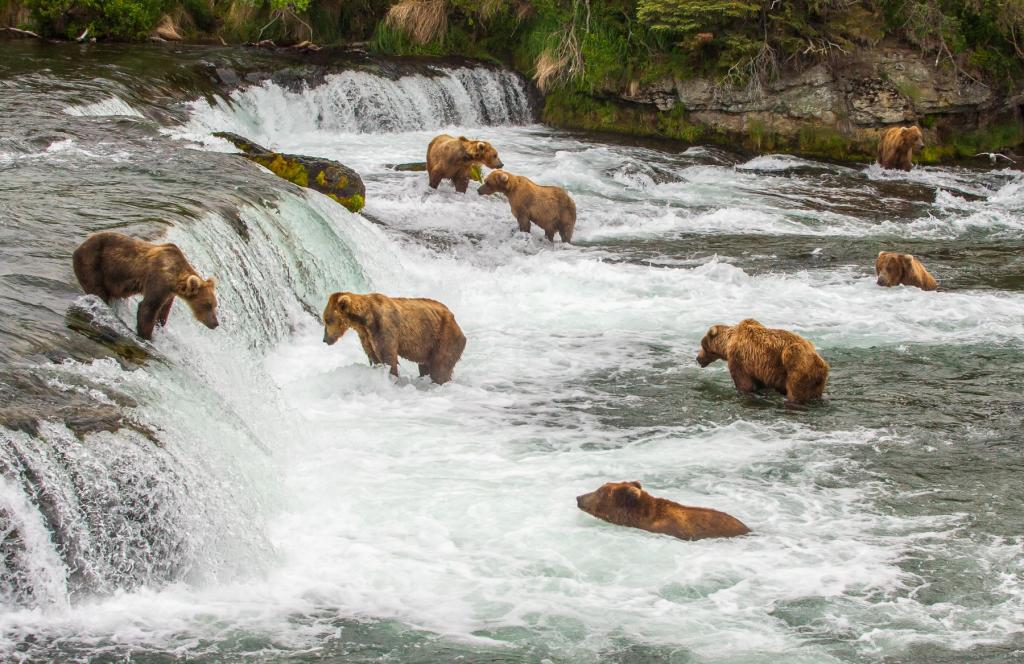
From the Brooks Falls bear viewing platforms, visitors can watch salmon making spectacular leaps with 900-pound brown bears at the top of the waterfall waiting with open jaws. Thanks to an incredible sockeye salmon run, there might be a dozen bears fishing in the area at the same time. The upper Brooks Falls viewing platform can be busy during peak times and may require a wait if the platform is at capacity. Park Rangers are on-site to monitor capacity and answer questions about the bears.
Don't forget to visit the other platforms for additional viewing options, and keep an eye out for bears wherever you go. You can see bears along trails and even right at Brooks Camp when you step off your boat or float plane. The boardwalk trail adjacent to Brooks Camp is another prime bear viewing area, with bears fishing in the river and on the shores of Naknek Lake in nearly every direction you look. Brooks Falls is the most iconic bear viewing spot in the park, give yourself time to watch bears in other areas.
Katmai Bear Viewing Tours
Bear viewing tours to the park, including day trips to Brooks Falls, are available from Kodiak, Homer, and Anchorage. From Homer and Anchorage, flights are about 1.5 hours each way via float plane, with 4 hours on the ground for self-guided bear viewing at the platforms. Some tours and packages depart from King Salmon, which can be reached by commercial airline from Anchorage, followed by a 30-mile floatplane flight or a 45 minute boat ride to Brooks Camp.
When Can I see Bears in Katmai National Park?
Bears are viewable from June through September, though the amount of bears fluctuates during the summer based on the salmon migration and spawning cycle. Bears begin to arrive in the area in mid-June along with the salmon. Late June through the late July sees the highest concentration of bears in the area, when you can usually see 10 - 30 bears at Brooks Falls, though up to 50 bears have been seen at the falls at one time. In August, the fishing is not as good on Brooks River and less bears are viewable. As salmon become weaker at the end of their spawning cycle in late August through the end of September, many bears return to Brooks River for a final feeding frenzy before winter.
Bears hibernate during the winter and will not eat or drink for months, losing nearly one third of their body weight. When they emerge from hibernation in the spring, they will start the feeding frenzy all over again to build up enough fat to get through another long winter.

Fat Bear Week
While bear viewing season along the park’s famed Brooks River peaks in July as the salmon start running, fall is the time when bears really up their feeding game. To celebrate a successful summer, the Katmai Conservancy hosts Fat Bear Week. This fun contest – held in early October – offers Katmai bear fans a chance to weigh in on which of the park’s more than 2,000 bears was most successful packing on the pounds prior to the start of hibernation. This online competition allows fans to vote on their top pick for fattest bear, with one burley bear named as the Fat Bear Week Champion.

Things to Do in Katmai National Park
In addition to bear viewing, Katmai National Park offers opportunities to raft, hike the Valley of 10,000 Smokes, camp in the backcountry, kayak the chain of lakes and rivers known as the Savonoski Loop, or explore the more remote coves and bays along the park’s coastline.
Wildlife Viewing
While Katmai is best known for its iconic brown bears, the park is also home to a diverse array of other wildlife species including wolves, lynx, caribou, wolverine, and a wide variety of year-round and migratory birds.
Fishing
Bears aren’t the only ones fishing in the park. Katmai is also home to the Alagnak Wild River and Naknek Lake, the largest lake in the park, supporting all five species of Pacific salmon as well as rainbow trout, Arctic char, Arctic grayling, and northern pike, making the park a famed destination for sport anglers.

Valley of 10,000 Smokes
Departing from Brooks Camp is the Valley of 10,000 Smokes Road, the only road in Katmai. This 23-mile dirt road winds past wildlife-inhabited meadows and river valleys and ends at Three Forks Overlook, which has a sweeping view of the Valley of 10,000 Smokes. This harsh but spectacular landscape was created by the largest volcanic eruption of the 20th century. On June 6, 1912, the Novarupta Volcano spewed ash and volcanic matter for 60 hours, blanketing the mountainous landscape in ash.
The Valley of 10,000 Smokes is now a popular destination for hiking and camping for those with backcountry and route-finding experience. Besides a couple miles of trails from the Robert F. Griggs Visitor Center, there are no designated trails in this section of the park. Daily bus tours from Brooks Camp head to Robert F. Griggs Visitor Center, with panoramic views over the otherworldly valley. Rangers explain the history of the eruption and then lead an optional 3.4 mile round trip hike to the valley floor.

History of Katmai National Park
Alaska Native History
The Sugpiaq people called the area home for nearly 9,000 years and established several villages, including one at the present-day Brooks Camp. You can view some of this history for yourself at the Cultural Site just a short walk from Brooks Camp. Here, you can view the recreation of a prehistoric Alaska Native house that was excavated at the site, along with interpretive displays about the history of people who lived in the area.
Novarupta Volcano
In 1912, Novarupta Volcano on the Alaska Peninsula violently erupted and rocked the area now known as Katmai National Park and Preserve. The wilderness was turned into a dynamic landscape of smoking valleys, ash-covered mountains, and small holes and cracks fuming with steam and gas, forcing the resettlement of many of the traditional Sugpiaq communities.
Four years later, explorer Robert Grigg climbed Katmai Pass and viewed the valley floor with its thousands of steam vents. He named it the Valley of 10,000 Smokes and led the effort that turned Katmai into a national monument in 1918. In 1980, the monument was enlarged to 4.2 million acres and designated a national park and preserve. Today, Katmai National Park and Preserve remains a wilderness landscape with little present-day development.
Katmai National Park Visitor Centers, Places to Stay, & Camping
Visitor Centers
Brooks Camp Visitor Center
Brooks Camp, the park's summer headquarters on the shores of Naknek Lake, 35 miles from King Salmon, is the hub of facilities and activities in the park. Visitors are reqiured to attend bear safety orientation at the Brooks Camp Visitor Center before exploring the area. The visitor center also has a small store and information on Ranger-led walks and programs.
Robert F. Griggs Visitor Center
This remote visitor center is located at the end of the Valley of 10,000 Smokes Road and is reachable via daily bus tours from Brooks Camp. Large windows at the visitor center overlook the ash-covered valley with it's winding rivers. Interpretive displays provide information on the history of the 1912 eruption.
King Salmon
The King Salmon Visitor Center is located in the small town of King Salmon and also provides information on Katmai National Park and Preserve. There are less than 5 miles of maintained trails in the park. Backcountry hiking and camping are permitted.
Katmai Camping & Lodging
Brooks Camp Campground
The campground at Brooks Camp can accommodate up to 60 people. This unique campground has no designated campsites but is a communal area for visitors to camp safely among the bears, with designated shelters for eating and storage caches for food, gear, and fuel. An electric fence surrounds the campground. Campers are allowed to eat meals at Brooks Lodge and use the facilities. Campsites fill up very quickly, so it’s advised to reserve as early as possible.
Brooks Lodge
Located at Brooks Camp, Brooks Lodge is a rustic wilderness lodge located near the shores of Naknek Lake, 1.2 miles from Brooks Falls. The lodge consists of a main lodge building that serves meals and sixteen cabins that sleep up to 4 people. Due to the limited space and the high demand for reservations, visitors who hope to stay at the lodge enter a lottery two years prior for the opportuinty to book a cabin.
Fly-In Wilderness Lodges
Scattered throughout the park and on the outside coast are a number of fly-in lodges that offer all-inclusive package trips. Some are designated exclusively for bear viewing, and some cater to sport anglers and include boats for traveling on the large lakes and up rivers.

How to Get to Katmai National Park
The park is open year-round but the concessioner services at Brooks Camp, the main access point for the park, are offered only June through mid-September. King Salmon, the closest community to the park, can be reached by commercial airline from Anchorage. From King Salmon you can take a 30 minute floatplane ride or a 45 minute boat trip across Naknek Lake to reach Brooks Camp. Bear viewing day trips are available by float plane Kodiak, Homer, and Anchorage.
View the live webcams of bears fishing in Katmai.
For more information, visit the Katmai National Park and Preserve website.
Plan Your Trip
Filter Your Trip

Lake Clark Lodge is located within Lake Clark National Park & Preserve, with daily flights to Katmai aboard our private aircraft for full day...
Katmai Video Gallery

Local Climate & Weather
For Alaska's day-to-day weather, it’s best to plan for a bit of everything. Learn more about weather in this area.