

Where to Find the Best Bear Viewing in Alaska
Think Alaska and you’re likely to picture bears, and you wouldn’t be wrong. The state has one of the largest bear populations in the world, and is home to three species: brown bears, including inland grizzlies and larger coastal browns, black bears, and polar bears. These massive mammals roam across most of Alaska, and while there’s always a chance you’ll see one ambling down a suburban road or in the distance on a hillside, to reliably spot one you’ll need to carefully choose the right time and place. If you'd like to join a guided experience, bear viewing tours and wildlife packages are offered throughout the state.
For brown bears, the biggest concentrations can be found along rivers during salmon runs and coastal estuaries. Black bears are more widespread and you’re more likely to spot these from a road or trail in the Southcentral or Southeast regions. Polar bears, the largest terrestrial predator in North America, live only in the Arctic. You should only seek these on a specific tour with a licensed guide.
Katmai National Park
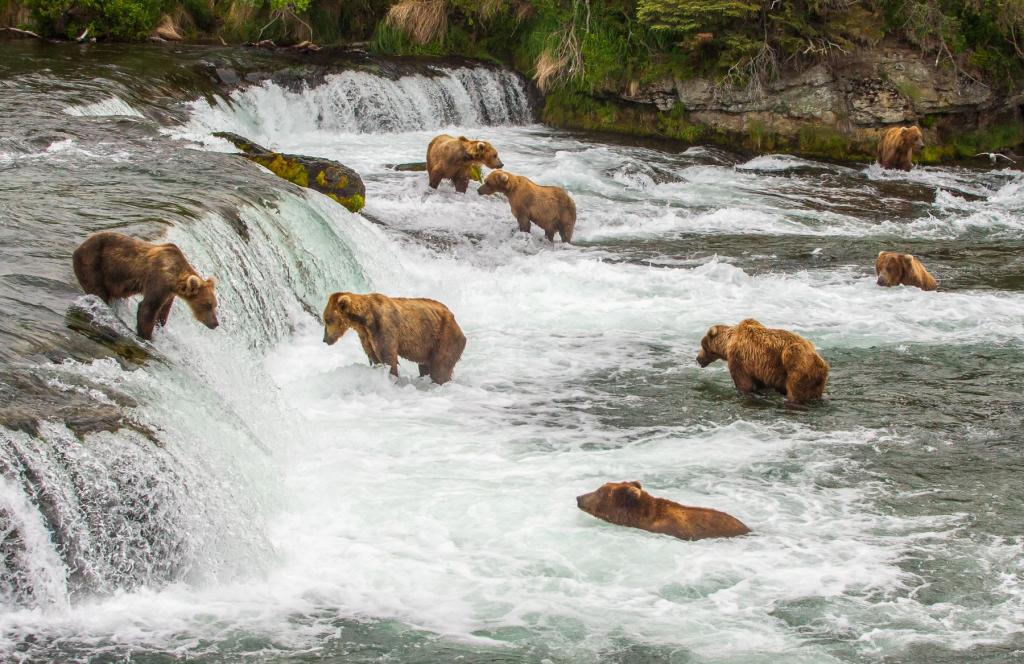
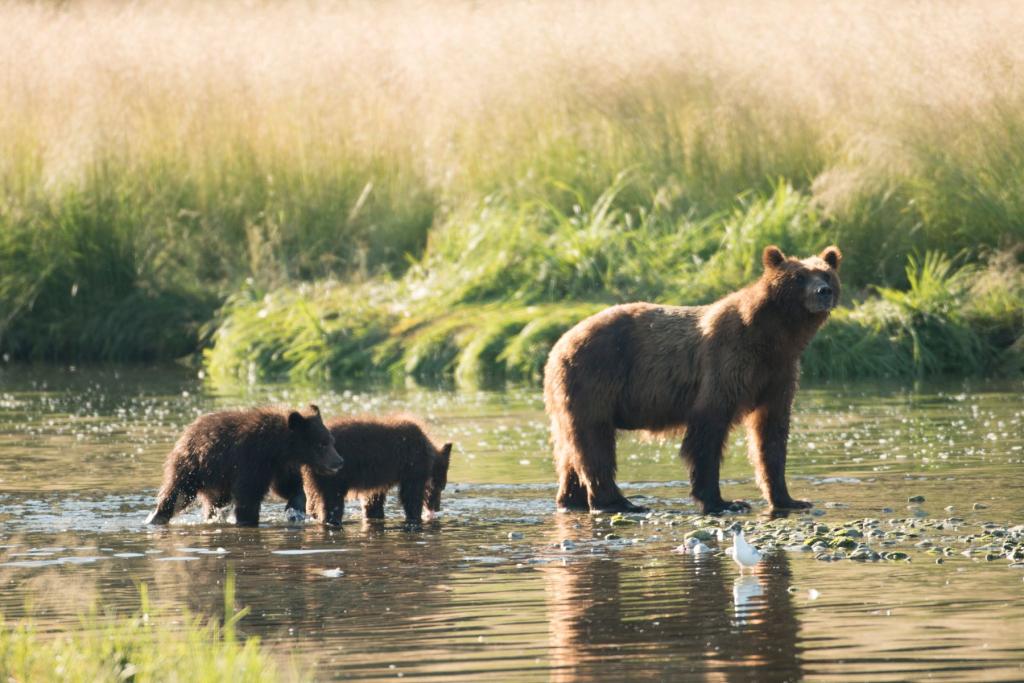
Brown bears are Alaska’s most famous bear residents, and the largest routinely seen by visitors, drawing wildlife watchers from around the world each summer. There are several classic spots for viewing brown bears in Alaska. Katmai National Park is a combination of breathtaking and reliable, as it’s home to the iconic Brooks Falls. This is where you can catch a shot of brown bears snapping salmon in flight as they jump up the falls. There are multiple viewing platforms, informative signs, and likely a lot of people in the peak summer months of June and July. You can reach Brooks Falls on a commercial flight from Anchorage to King Salmon, and then a floatplane to Brooks Camp, or a full-day flightseeing and bear viewing trip from Anchorage or Homer.
Lake Clark National Park
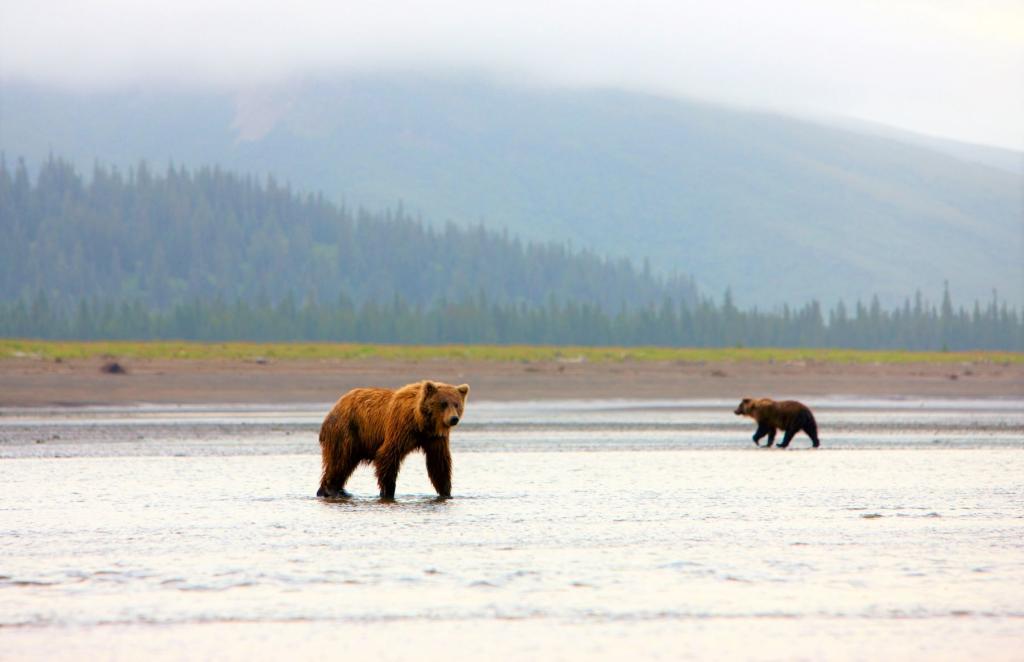
Lake Clark National Park stands out as being accessible on a day trip from Anchorage and Homer by floatplane and hosting a high concentration of brown bears with fewer crowds than Katmai. Here you’re likely to spot brown bears roaming coastal meadows or fishing in streams during the salmon runs. Most visits are by guided day trips or lodge-based excursions, with pilots landing on remote beaches or lakes before transferring by boat or on foot to established viewing areas.
McNeil River State Game Sanctuary
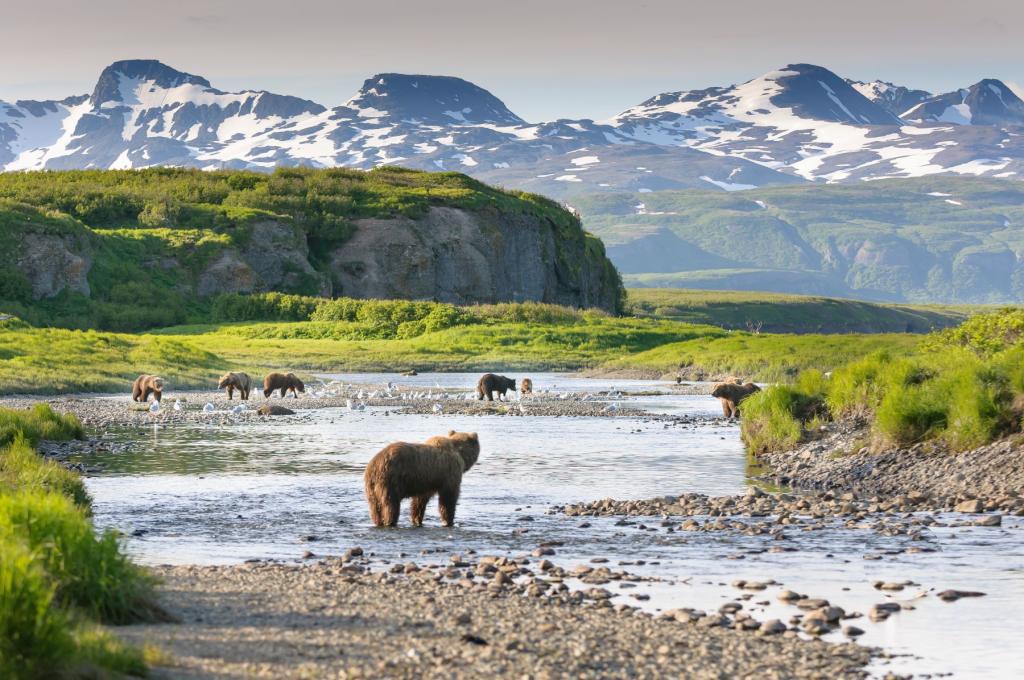
The McNeil River State Game Sanctuary is another iconic spot, but a bit more rustic than Kamai - and more difficult to get there. There’s no infrastructure such as viewing platforms; instead, you’ll be at ground level in a small group, guided by a ranger. Visitors are only allowed with permits, which are issued by a lottery system. You’ll therefore need to plan your trip around the weather and your permit window. You’ll be richly rewarded with solitude, which means more intimate viewing sessions.
Kodiak Island
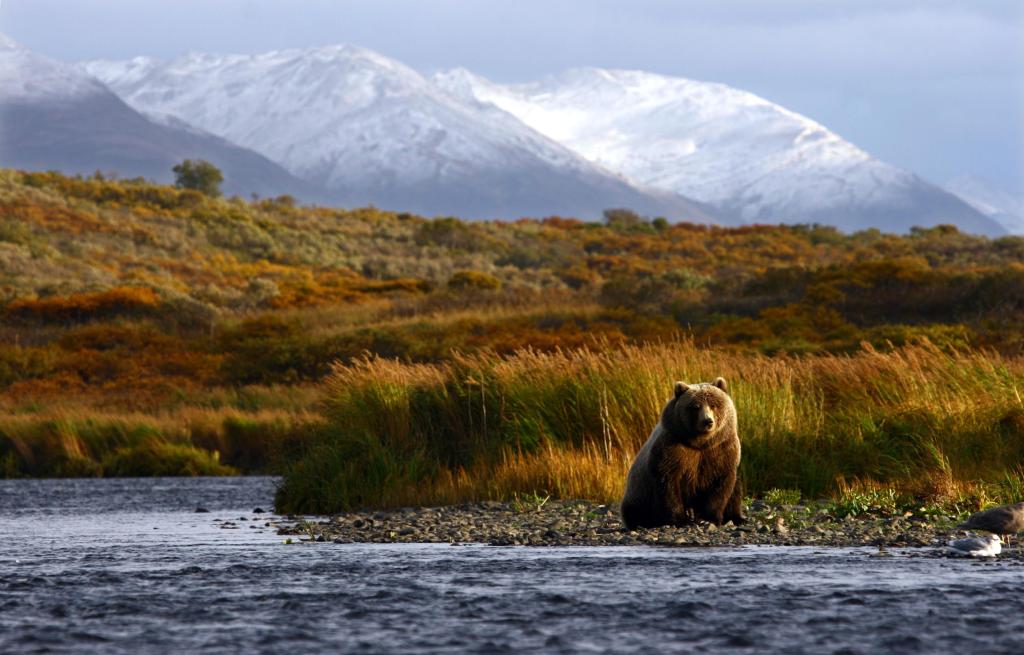
Kodiak brown bears are known as the largest brown bears on the planet, thanks to a calorie-rich diet of salmon, coastal meadows, and carrion; males can exceed 1000 pounds in their prime. They’ve lived on the Kodiak Island archipelago, a maritime climate which hosts an abundance of rich vegetation, for thousands of years. Bear viewing tours here are commonly undertaken by boat or floatplane, since Kodiak brown bears don’t tend to congregate around a central food source the way their mainland relatives do.
Anan Wildlife Observatory Site
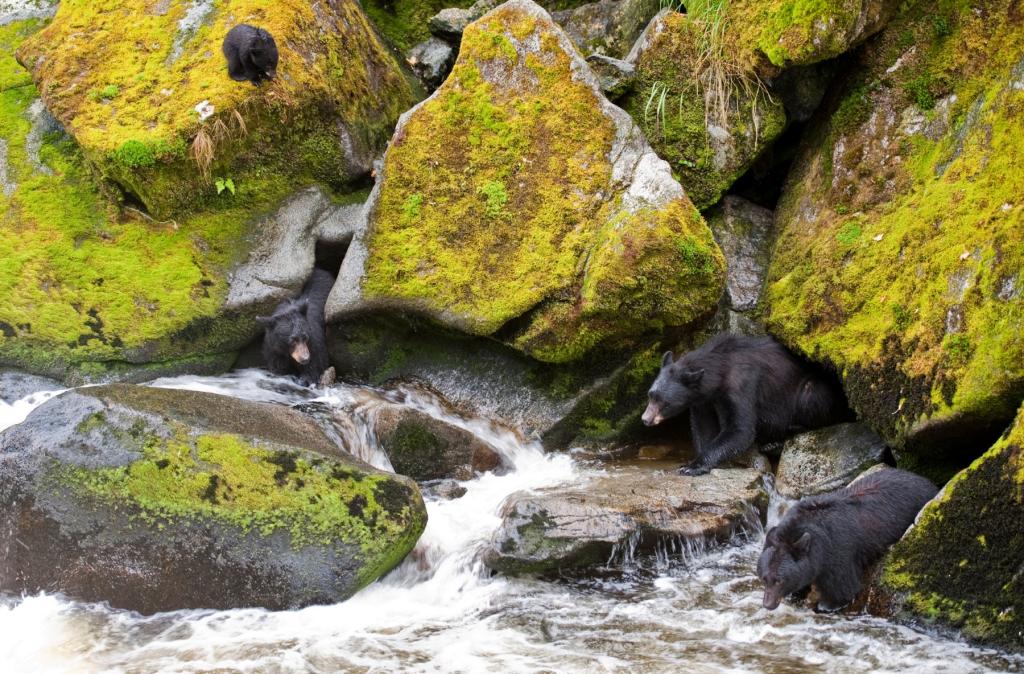
Anan Wildlife Observatory, located in Tongass National Forest about 30 miles from Wrangell, is one of the few places on earth where both black and brown bears feed on salmon at the same time. Visitors view bears from a multi-level viewing platform, featuring a covered observation area and a spiral staircase leading down to a photo blind for closer views of bears fishing at the falls. Most visitors to Anan Creek arrive via a guided tour, accessing the area by floatplane or boat from Wrangell, or by floatplane from Ketchikan. A limited number of permits are available to the area every day.
Pack Creek Bear Viewing Area
For visitors to Southeast Alaska, the Pack Creek Bear Viewing Area is a good location to spot brown bears. You’ll access it by floatplane from Juneau, and it’s a popular cruise ship excursion. The area is controlled and requires a permit, but it’s still rustic and wild in feel.
Black Bear Viewing
Black bears are Alaska’s most widespread bear and one you’re most likely to spot organically. They’re fairly common throughout Southcentral, Southeast, and Interior Alaska, feeding mostly on plants and berries with the occasional fish and other meat. Smaller than brown bears (but still powerful and requiring caution), their name is a bit misleading; while these bears are most often black, they can also be brown, cinnamon, or even blonde in their coloring. Out of all three species of bears, you’re most likely to spot a black bear near a town or trailhead rather than concentrated in a single area. That means sightings are more opportunistic, and you don’t necessarily need to hire a guide or take a tour to see one.
Polar Bear Viewing
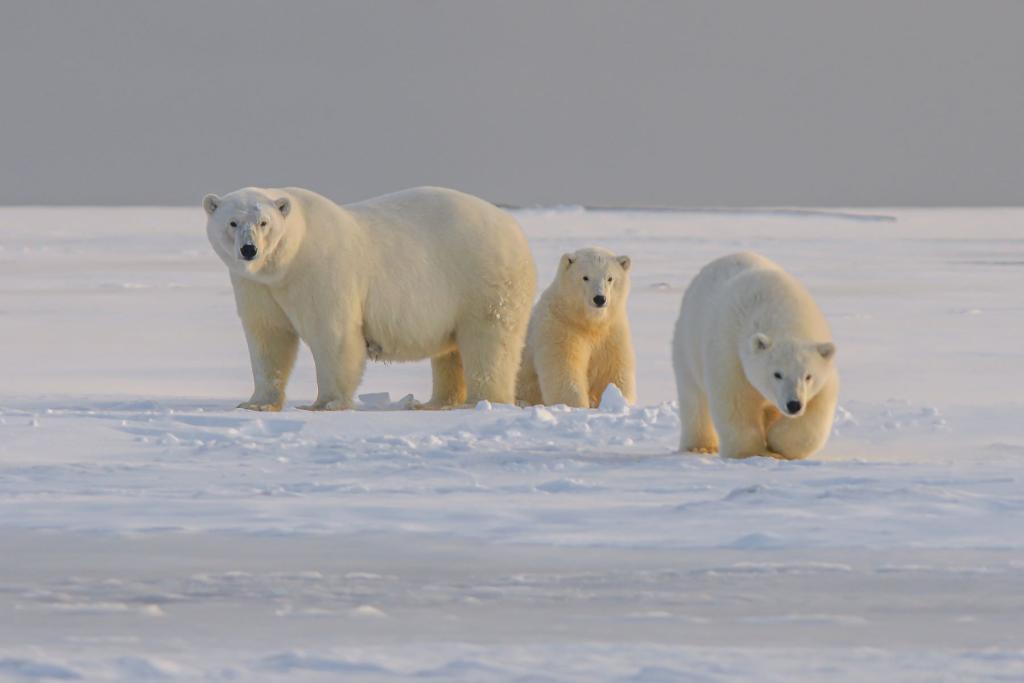
Next, the mighty and imposing polar bear, a strict carnivore and the largest bear species on Earth. Polar bear viewing in Alaska is remote and weather-dependent. When conditions align, it offers one of the most powerful wildlife experiences in North America, but you’ll need patience, preparation, and respect for both the bears and the communities that share their landscape.
Polar bears live in Alaska’s Arctic, along the coast and offshore sea ice. Popular places to view them are around the towns of Kaktovik and Utqiaġvik (formerly Barrow). Polar bears are an apex predator in an open landscape, so you’ll need to keep a clear distance and follow instructions from your guide. A zoom lens on your camera is recommended!
Bear Safety
You’ll want to keep general safety considerations in mind for all bears, whether your goal is to see them or you’re just out hiking or camping in bear country. Make your presence known by clapping or yelling – you’ll commonly see locals doing this while out hiking or berry picking. The last thing you want to do is surprise a bear, especially if it has cubs or food nearby. Carry bear spray and know how to use it, but also don’t let it lure you into a false sense of safety. Store food in bear-resistant containers and away from your camp if you’re staying overnight in the wilderness. Finally, don’t get complacent near towns or popular bear-viewing sites where you may encounter bears who seem used to humans; familiarity doesn’t mean safety. Learn more about how to be bear aware in Alaska.
With preparation and respect, and a bit of luck and logistics, bear viewing in Alaska can be an extremely rewarding experience – both safe and unforgettable. Whether it’s watching a brown bear from a structured platform at Brooks Falls, catching a distant view of a polar bear in the Arctic, or spotting a black bear wandering on a bike path through town, the excitement of watching one of these mighty mammals in their natural habitat won’t be soon forgotten.
Alaska: AKA Your Next Adventure
Where will your Alaska adventure take you? Order our Official State of Alaska Vacation Planner and plot your course.