

Wildlife Viewing on Alaska Cruises
Alaska is home to some of North America’s most iconic animals, from large mammals such as bears, whales, sea lions, Dall sheep, and moose to smaller but equally extraordinary species such as bald eagles, seals, salmon, and sea otters. It’s one of the largest draws for travelers to the state. But with its vast swaths of wild nature, a common misconception is that you need to venture deep into the wilderness to catch sight of these animals. However, many visitors experience Alaska primarily from a cruise ship and, fortunately, that doesn’t mean missing out on wildlife.
Tips for Wildlife Viewing from an Alaska Cruise Ship
Alaska cruises pass through vibrant coastal ecosystems where marine mammals, seabirds, and even sometimes bears and mountain goats are visible from the ship’s decks. While more intimate wildlife encounters usually require a guided shore excursion, simply watching the shoreline and surrounding waters as you sail can yield surprisingly frequent sightings.
Spotting wildlife from a cruise ship is generally all about scanning your surroundings. Check the water first, looking for movement or contrast: anything that breaks the surface, from a whale’s blow to a line of ripples that might indicate a pod of porpoises. Then, watch the shoreline, especially at the edge where the forest meets the water; it’s a common travel corridor for animals. Kelp beds are another reliable indicator as they often signal the presence of sea otters or feeding activity below the surface. Even distant cliffs warrant a closer look, with seabird colonies or the occasional mountain goat visible against the rock. The longer you spend on deck, the more these patterns will stand out.
To make the most of viewing wildlife from your cruise ship, you’ll want to combine timing, attention, and preparation. Have a pair of binoculars at the ready; not only will they bring animals into incredible focus, but they’ll also help with your initial identification (from afar, a bear and a log can often look similar unless the bear is moving!). Be on deck when your ship passes through narrow channels or glacier bays. Listen for wildlife announcements from the crew or captain; they’ll also be looking out for animals on shore and in the water. And finally, note that early mornings and evenings tend to yield the most sightings of whales, seabirds, and coastal mammals.

What Wildlife Can You See on an Alaska Cruise?
Whales
You’re likely to spot a variety of wildlife from the decks of a ship. Cruisers in Southeast Alaska, for example, are frequently treated to humpback and orca whale sightings in the sheltered waters of the Inside Passage. Both of these massive marine mammals frequent the waters here, with the former often spouting from their blowhole or dramatically breaching. If you’re lucky, you might also see a breach or the distinctive lift of their tail flukes. Orcas tend to travel in pods, and they surface and submerge in sequence. Another common marine mammal is the Dall’s porpoise, which is smaller, and likes to zip alongside boats riding bow waves.

Sea Otters, Sea Lions, & Harbor Seals
Coastal mammals are another common site from cruise ships. Sea otters often bob around in kelp beds, especially around Sitka and Glacier Bay. Harbor seals are commonly hauled out on ice or rocky shorelines; as ships slow near tidewater glaciers in places such as Glacier Bay or College Fjord, the water often becomes dotted with floating ice, creating ideal haul-out spots for harbor seals. Look for their rounded heads occasionally popping up in the water as the ship passes by. And Steller sea lions, the largest sea lion in the world, can often be heard before they’re seen. They congregate in large, noisy colonies and usually haul out on rocky islets, navigation buoys, or exposed reefs.

Birds
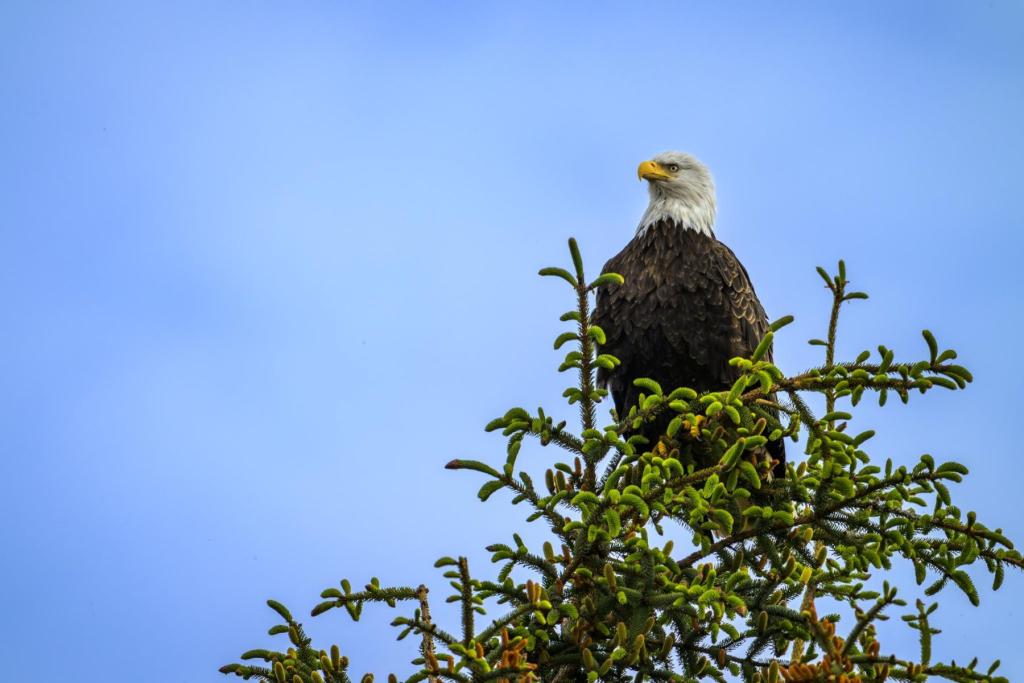
Birds are abundant and fun to look for from a cruise ship. In the Southeast region and the Gulf of Alaska, you can expect to see bald eagles; these massive raptors are common along coastlines and fishing areas. Puffins gather in areas such as the Gulf of Alaska and near offshore islands; look for their signature orange beaks.
Other common seabirds include kittiwakes, murres, and cormorants, each with distinct habitats that make them relatively easy to identify from your deck. Kittiwakes often nest in dense colonies on steep cliff faces, their constant calls carrying across the water, while murres gather in tightly packed groups on rocky ledges or float low in the water, looking like small black-and-white dots. You can frequently see cormorants perched on rocks or navigation markers with their wings outstretched to dry, a characteristic pose that stands out even at a distance.
Alaska Wildlife Shore Excursions
While you can see a surprising amount of wildlife from the deck of a cruise ship, some animals are better seen from shore excursions. On these, a trained guide will take you directly to the best viewing spots. Common shore excursions include bear viewing for both black and brown bears, where sightings are far more reliable than from a ship. Some of the most popular bear viewing shore excursions depart from Juneau, Sitka, and Wrangell, with trips to places such as Pack Creek and Anan Creek.
Whale watching excursions are also often more exciting than ship sightings, as small boats can get you close to feeding grounds and watch behavior like bubble-net feeding in close detail. Ports such as Juneau and Icy Strait Point are particularly well known for humpback activity. Moose are another large mammals that are rarely seen from a cruise ship and are best spotted on a land tour in Southcentral or the Interior, especially around Anchorage and Denali National Park.


Alaska: AKA Your Next Adventure
Where will your Alaska adventure take you? Order our Official State of Alaska Vacation Planner and plot your course.