

Alaska has two reputations that most people keep separate in their minds: the Alaska of summer – think glaciers and whale watching, the Midnight Sun, and spotting moose and bears – and the Alaska of winter, where the northern lights dance in the sky above a snow-covered wilderness.
What most visitors don't realize is that for about eight weeks each fall, you don't have to choose. September and October sit in a rare overlap where aurora season is open, and most of the summer's best activities are available to enjoy. It's the most underrated window on the Alaska travel calendar – though most Alaskans love traveling in-state during this time – and if you time it right, it delivers something neither summer nor winter can on its own.
What Makes Fall Special for the Northern Lights in Alaska?
The case for fall aurora viewing starts with a genuine scientific advantage: twice a year, around the spring and fall equinoxes, the Earth's magnetic field aligns with the solar wind in a way that enhances geomagnetic activity and improves your chances of seeing it. The fall equinox falls in late September, putting it squarely in the middle of Alaska's shoulder season. So, if you visit Alaska in the fall, you're visiting during one of the two best windows in the solar calendar for aurora activity.
Beyond the science, fall offers practical advantages that winter simply can't. Temperatures in September in parts of Alaska aren't yet winter cold – you can stand outside watching the sky for an hour without your camera battery dying or your fingers going numb before you've had a chance to look up. By October, temperatures drop noticeably, particularly in Fairbanks and points north, but remain far more manageable than the negative double digits that are common during winter aurora season.
Alaska's fall colors are fleeting but spectacular: the tundra goes orange and red, the birch forests turn gold, and the whole interior of the state briefly looks like it's been lit from within. Seeing the northern lights reflected in an unfrozen lake, framed by hillsides blazing with color, is an experience that's simply unavailable in winter.
Shoulder season also means shoulder season pricing. Flights into Fairbanks and Anchorage are typically cheaper in September and October than during peak summer or the heart of winter, and many lodges and accommodations offer reduced rates as the summer crowds thin out. For visitors who want to experience a place like Chena Hot Springs without competing for space with peak-season tour groups, fall is the answer.

When in the fall are the Northern Lights Visible?
Aurora season in Alaska officially begins in late August, when nights grow long enough to see the lights again after the midnight sun. But the sweet spot for fall viewing is a more specific window: mid-September through mid-October.
The fall equinox (around September 22 or 23 each year) sits at the center of this window and is worth planning around specifically. Geomagnetic activity tends to peak in the days surrounding the equinox, and the combination of reasonably long nights, statistically elevated aurora activity, and peak fall colors makes the last two weeks of September and first two weeks of October arguably the most well-rounded time to visit Alaska all year.
In both months, the prime viewing hours remain consistent with the rest of aurora season: 10:00 pm to 2:00 am local time, when the sky is at its darkest and auroral activity typically peaks.
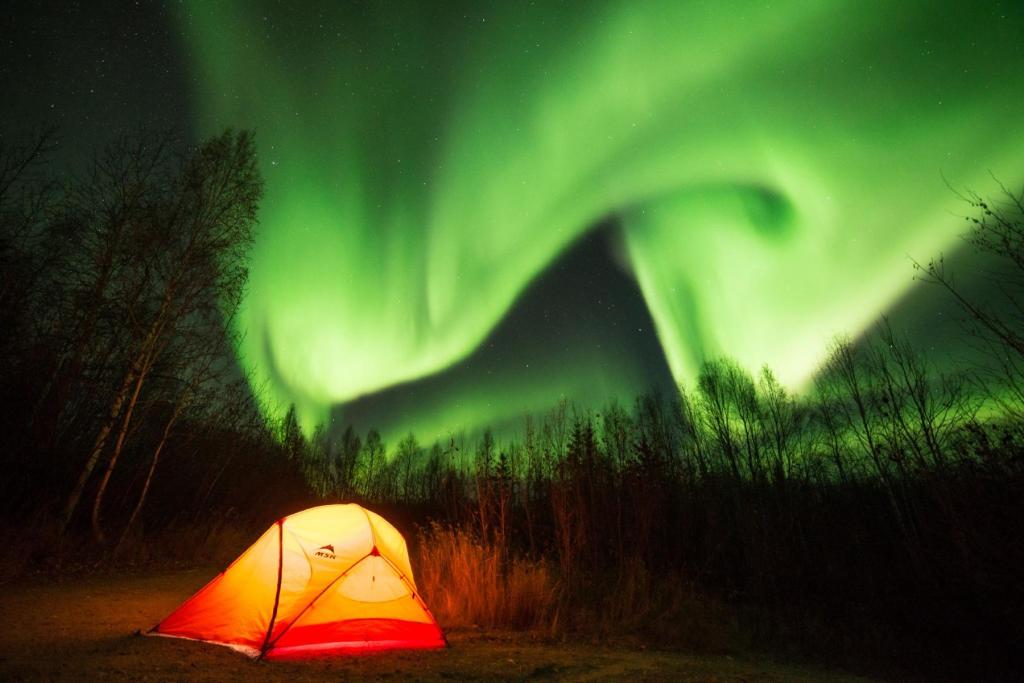
What Fall Aurora Viewing is Actually Like
The aurora itself doesn't change with the season; the physics are the same in September as in January as in March; a Kp 7 storm looks the same in October as it does in February. What changes is everything around it.
In the winter, northern lights viewing in Alaska is a dedicated pursuit. You dress for temperatures that can dip well below zero, you wait in the dark for hours, and the landscape is deep in snow. It's dramatic, and many people find the intensity of that experience part of the point.
By comparison, in the fall, the experience is more accessible. A September aurora hunt might start with a hike or a drive through fall colors, dinner at a lodge, and then stepping outside into cold but comfortable darkness. (Yes, there's a comfortable cold in Alaska!)
One thing fall does particularly well is aurora reflections. Before the lakes and rivers freeze (typically sometime in October), the northern lights can appear mirrored on perfectly still water, doubling the display and creating foreground opportunities that winter photographers simply don't have access to. If aurora photography is part of your reason for visiting, early fall is worth prioritizing for this reason alone.
There is a trade-off for trying to see the northern lights in the fall though: September nights are shorter, cloud cover can be more variable than the crisp, stable winter air that makes February and March Alaska's most statistically reliable aurora months, and the very early part of the season (late August and early September) pushes the limits of how much darkness there is to work with. Plan for several nights of viewing rather than banking on one, and keep your weather forecast as close an eye on as your aurora forecast.

Where in Alaska Can You See the Northern Lights in the Fall?
The best places to see the northern lights in Alaska in the fall are much like those during the rest of the aurora season:
Fairbanks
Fairbanks is the premier destination, as it is throughout aurora season. Positioned directly beneath the auroral oval and well inland from coastal weather patterns, Fairbanks combines reliable darkness with reliable aurora activity. Chena Hot Springs Resort, about an hour east of the city, is an ideal fall base: geothermal soaking pools, aurora viewing from the water, and fall foliage along the Chena River valley on the drive out. The Chena River State Recreation Area also offers excellent hiking and scenery before the cold settles in, and there are a number of other resorts and lodges in this area that offer aurora-viewing packages.
Denali Natonal Park
Denali National Park and the Parks Highway corridor are among the best options in the state for fall colors. The park's vast tundra blazes with fall color from mid-August into September, the wildlife viewing is exceptional (fall is moose rut season, and bears are active and visible as they prepare for hibernation), and once the summer bus tours wind down in mid-September, private (or rental vehicles graded for dirt roads) vehicles can drive up to Mile 30 of the Park Road. Set up well away from the small amount of artificial light near the park entrance, and the aurora – when it appears – is overhead with mountains and tundra beneath it.
Anchorage Area
Anchorage and Southcentral Alaska offer more fall activities than most visitors expect. The Seward Highway along Turnagain Arm is one of the most scenic drives in North America in any season; in September, it combines fall colors, mountain views, and wildlife (beluga whales are often spotted in the Arm in fall) in a single road trip. Hatcher Pass, in the Mat-Su Valley, is a high alpine area that peaks for fall colors in early to mid-September and offers a legitimate aurora viewing spot when skies are clear. For viewing, a short drive from Anchorage toward Eklutna Lake or the Knik River area puts you in genuine darkness within 45 minutes.
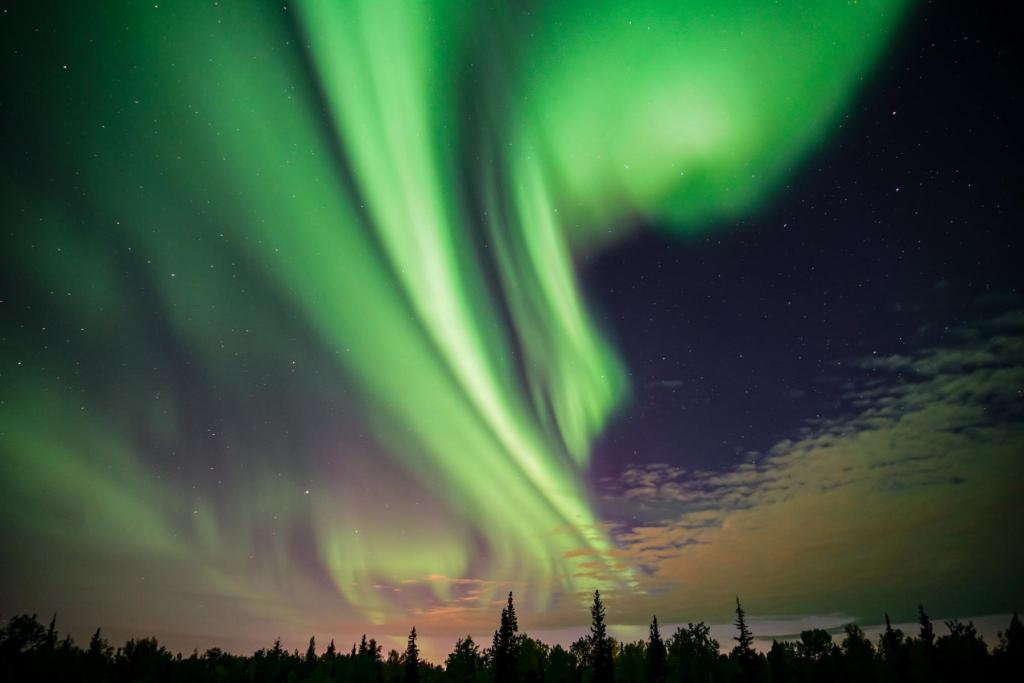
The northern lights don't run on a schedule in any season, so when it comes to planning your trip, follow the same advice as you would for winter: give yourself several nights for aurora hunting, check the forecasts, get away from artificial light, and be patient. If the conditions are right, you'll be rewarded for your effort.

Alaska: AKA Your Next Adventure
Where will your Alaska adventure take you? Order our Official State of Alaska Vacation Planner and plot your course.