

Tips for Planning an Alaska Trip with Kids in Winter
Winter in Alaska has a special kind of magic. Days are short while twilight lengthens, snow blankets the mountains, and the aurora borealis puts on a show that no summer trip can offer. For families willing to embrace it, visiting Alaska in the winter will transform winter wonder into magical memories.
There are extra considerations too, though: cold temperatures require careful planning to keep everyone comfortable, and winter activities are completely different than what you’ll experience in the summer. The key to planning a good winter trip to Alaska is the same as it is any season: match the pace and activities to your kids' ages, build in plenty of downtime, and don't over-plan. Here's how to do that at every stage, from babies to teens.
Alaskan Winter Travel with Babies and Toddlers
Winter travel with very young children is entirely doable, but it rewards a slower, more concentrated itinerary – even more than summer does. Cold-weather logistics like bundling a toddler in and out of car seats, timing outings around naps, and short daylight windows are all considerations. Pick one city as a base – Anchorage or Fairbanks are top contenders – and build your days (and nights) from there.

Anchorage is a good contender for this age group. Indoor attractions like the Anchorage Museum give you a warm midday break, and outdoor spots such as Westchester Lagoon offer easy, low-stakes ice skating. The city hosts special family skate events every Saturday from 1-3 in January and February, complete with warming barrels, free hot chocolate, and skate-assist seats for little ones. Toddlers will love viewing Alaskan animals up-close at the Alaska Zoo in Anchorage and the Alaska Wildlife Conservation Center (just south of Girdwood).

If your visit lines up with late February or early March, Fur Rendezvous — Anchorage's long-running winter carnival — has a low-key carnival and fun events that work well even for the shortest attention spans.
Fairbanks is also a great choice, with several good museums that will fascinate young travelers, but also some great animal experiences – like meeting reindeer and musk ox – that are really unique for kids of all ages. Also, the whole family will enjoy the town of North Pole, where you can soak in Christmas spirit at any point in the winter.
From either city, northern lights viewing is best left as a bonus rather than the goal at this age: aurora activity peaks well after a toddler's bedtime, so plan for a heated cabin or lodge with big windows facing north, so you can watch for a show and only wake the family if it delivers.
Winter in Alaska with School-Aged Kids (Ages 5-12)
This is arguably the sweet spot for a winter Alaska trip. Kids in this range are old enough to handle real cold-weather gear, stay up a little later, and actually remember what they saw — but young enough that simple, sensory experiences like snow, dogs, and lights are still thrilling on their own.

Anchorage remains a strong home base, especially if your dates overlap with Fur Rendezvous in late February, when snow sculpture competitions, the Running of the Reindeer, and sled dog races turn downtown into an outdoor festival. A short drive south to Girdwood adds cross-country skiing or snowshoeing on flat, forgiving terrain, and many outfitters just north of Anchorage offer short, kid-length dog mushing tours that give this age group a genuine taste of the experience without a full-day commitment.
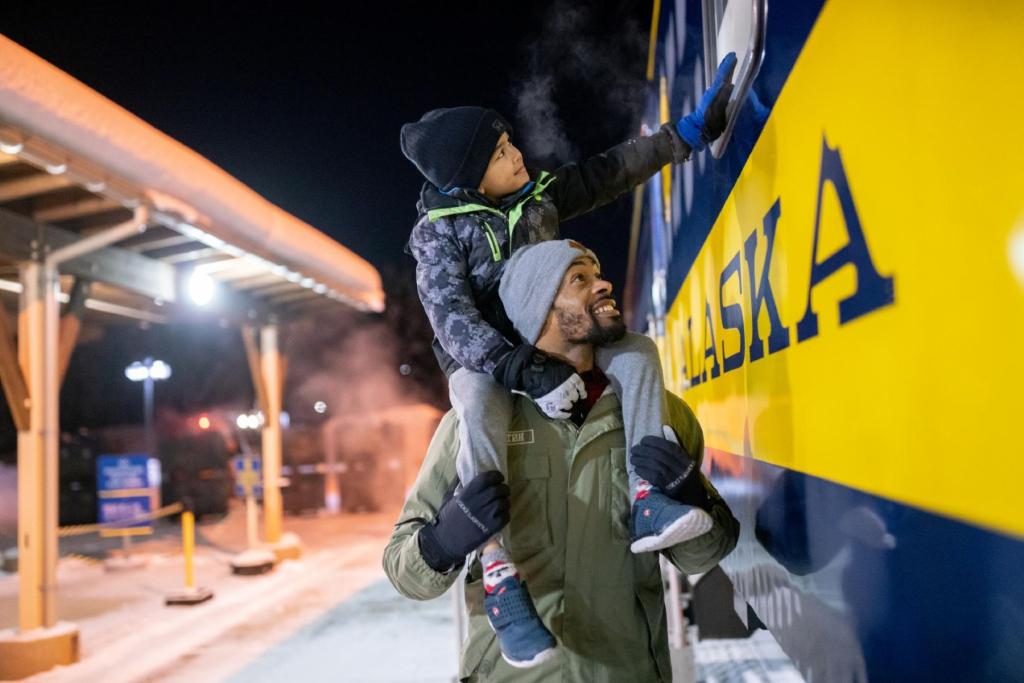
If your schedule allows a second stop, Fairbanks is worth the short flight or the day-long train ride on the Aurora Winter Train from Anchorage to Fairbanks. While children are not allowed in the hot springs, Chena Hot Springs Resort is also home to the Aurora Ice Museum and a sled dog kennel that are both great for kids of this age. Similar for littler kids, encountering animals and visiting North Pole are good for children in this age group too.
Aurora viewing becomes more realistic at this age, since kids can usually manage one late night if there's a nap or a slow morning to recover with. Build in a flexible night or two rather than a single fixed outing. The lights are never guaranteed, and a family that's tried twice has better odds than one that tried once.
Traveling to Alaska with Tweens (Ages 10-13)
Tweens occupy an interesting position when it comes to winter travel in Alaska: they're old and strong enough for some truly adventurous activities and have long enough attention spans for an aurora vigil, but they still might want (or need) some parental guidance through anything unfamiliar or physically demanding. This is a good age to add a bit more adventure to the itinerary without going full teenager.
Skiing and snowboarding lessons are a fun option. Most of the ski hills and resorts across the state offer lessons, so your tween trying snow sports for the first time isn't thrown onto a real mountain right away. Longer dog mushing excursions, ice fishing, and guided snowmobile trips (as a passenger, with an adult driving) are all reasonable additions at this age and are available throughout the state. Tweens tend to genuinely enjoy the mechanics of dog sledding — how the dogs are harnessed, how a musher reads the trail — more than younger kids do.

If Fairbanks is on your itinerary, tweens are usually ready for a proper aurora tour: a guided outing to a dark-sky viewing spot outside town, with a heated yurt or cabin to retreat to between light shows. Framing the wait – hot cocoa, stargazing, spotting constellations while you watch for the aurora — as part of the adventure keeps tweens engaged even if the lights are a no-show. The World Ice Art Championships is also worth visiting with kids this age and older who can appreciate the artistry and beauty of the ice carvings that are made each year.

Traveling to Alaska with Teenagers
Teenagers are ready for the full range of what Alaskan winter has to offer, and honestly, this may be the age group that a winter trip suits best. The extremes of daylight and darkness, the cold, and the otherworldliness of the aurora tend to land as genuinely cool rather than merely tolerable; be prepared to have fond memories of your Alaska trip with your teens that they actually want to talk about with you.
Give teens real activity: a full-day dog mushing excursion where they can help harness and handle the team, a lesson or two at Alyeska Resort for skiers and snowboarders who want to progress past the beginner slopes, or a snowmobile trip where an older teen may be able to drive with supervision, depending on the outfitter's age policies.

Fairbanks trips built specifically around the aurora work well for this age – multi-night stays give real odds of a clear, active night, and teens can handle the late hours and early mornings that serious viewing requires. Many outfitters offer photography-focused aurora tours that teach basic night photography, which tends to hook teens who'd otherwise be unimpressed by "just" looking at the sky.
Anchorage too has plenty to offer if you're based there for the trip: teens can hold their own on the ice at Westchester Lagoon, take a full mountain day at Alyeska, or catch the Iditarod's ceremonial start in early March.

Juneau is another destination that gets easily overlooked in favor of cities further north. In addition to having excellent museums and the chance to engage your teen in civic discussions at the Alaska State Capitol, Juneau is home to Eaglecrest Ski Area, where you can all enjoy the slopes without as much challenge and at a more affordable price than bigger-name resorts.
No matter where you visit, give teens some say in the itinerary and a bit of independence where it's reasonable, and the trip will feel less like a family vacation being done to them and more like one they're genuinely part of.
Winter Pro-Tips for Every Age
Whatever the ages involved, a few things apply across the board:
- Layers are essential: base layers, insulating mid-layers, and a windproof, waterproof outer shell matter more than any single heavy coat.
- Don't skimp on boots, gloves, and hats, since cold tolerance drops fast once extremities get cold, especially with younger kids, who will have a hard time moving enough to keep themselves warm.
- Build slack into every day; winter logistics (gearing up, warming up, drying gear, shorter daylight) take longer than people expect.
- Treat the aurora as a bonus, not a guarantee, no matter what age your kids are.
The families who enjoy Alaska in winter most are usually the ones who came for everything else and let the lights be a surprise on top of it.


Alaska: AKA Your Next Adventure
Where will your Alaska adventure take you? Order our Official State of Alaska Vacation Planner and plot your course.