

Significance of Athabascan Beadwork & Sewing
My beadwork is usually close by, and never far from my mind. It might be on a desk or table, tucked into a sewing bag, or on my beading mat, ready for the next few stitches. My latest project is a beaded dog blanket (like a dog vest) connected to a cultural revival for the Iditarod Trail Sled Dog Race, inspired by Jody Potts-Joseph’s vision to dress her dog team with care. In our communities, traveling by dog team to gatherings meant showing up in your best, and that included the dogs. It was about respect, pride, and arriving with intention.

If you look closely, each piece of beadwork tells a story through its designs, colors, and materials. Athabascan peoples are diverse across Alaska, and beadwork and sewing styles vary by region, family, and the materials we use. Interior Athabascan beadwork is often known for bold florals and bright colors on moosehide or felt, with designs inspired by the places we come from and the world around us: rivers, animals, berries, and flowers.
Beading is one of those skills where you can learn the basics in a day and still be learning 20 years later. Like many Athabascan and Alaska Native people, I learned to bead and sew from family and mentors: my mom, my grandmas, my aunties. I also learned through programs like Johnson O’Malley, which helped put culture back into our hands. I learned by watching and asking. I tried, made mistakes, and tried again.
Some of my most treasured gifts are patterns handed down by grandmothers. Not everyone got the opportunity to learn in that way, so I try to share what I can through tutorials, social media, and workshops. Beading has been medicine in my own life, a way to feel close to my ancestors and the people who taught me, and sharing is my way of paying that forward. If I can help someone start their first pair of slippers, sew fur trim for the first time, or feel that spark of cultural connection in their hands, that matters.

In Athabascan communities, beadwork is also tied to gifting. Often, it is something you make for someone, especially for big life moments. Many beaded items are made for ceremonies, potlatches, and other special occasions. At memorial potlatches, families honor loved ones who have passed, share food, and give gifts in gratitude. The act of making can be part of the grieving and healing journey, and we often do it together as the gathering gets closer. We bead, sew, gather, and process throughout the year as we remember our loved ones and prepare to show our care in a tangible way.
Wearing beadwork can be just as meaningful. If you have ever seen Alaska Native regalia at a cultural gathering, you already know it can change how you carry yourself. It is pride, yes, and it is also identity. It shows up in modern life in beautiful ways, especially at graduations. Beaded caps, stoles, earrings, and accessories help students honor their family and culture as they step into a new chapter. On an ordinary day, putting on a pair of beaded earrings can feel empowering. You remember where you come from, and you remember you are loved.

People sometimes say you can tell where beadwork comes from by the designs and style. That can still be true, and it can also be harder now because patterns travel and artists connect across distance. I love that part. We learn from each other, and each artist still has their own signature in how they shape florals, outline, choose color, and finish a piece. Beadwork also reflects what materials are available and what knowledge is being carried forward. Many Athabascan artists are continuing and reclaiming the processing of traditional materials and land-based techniques, whether that means tanning hides, working with fish skin, or incorporating materials gathered with care.
If you’re visiting Alaska, you’ll see beadwork in many places, especially jewelry and other items made for everyday wear and gifting. There’s no shortage of Athabascan and Alaska Native beadwork and sewing to purchase, from intricate earrings and chokers to mittens, hats, moccasins, keychains, belts, framed pieces, and more. Some items are made for ceremony and family use, while others are made to be shared with the wider world. If you do decide to buy, I encourage you to look for work made by Athabascan or Alaska Native artists, and to support Native-owned shops that credit the maker.
Some artists make a full living from beadwork, and many make a partial living from it. Supporting beadwork artists means recognizing that this is cultural expression and skilled work. When you purchase beadwork, you’re doing more than taking home something beautiful. You’re supporting an artist, a family, and a living tradition that keeps growing.
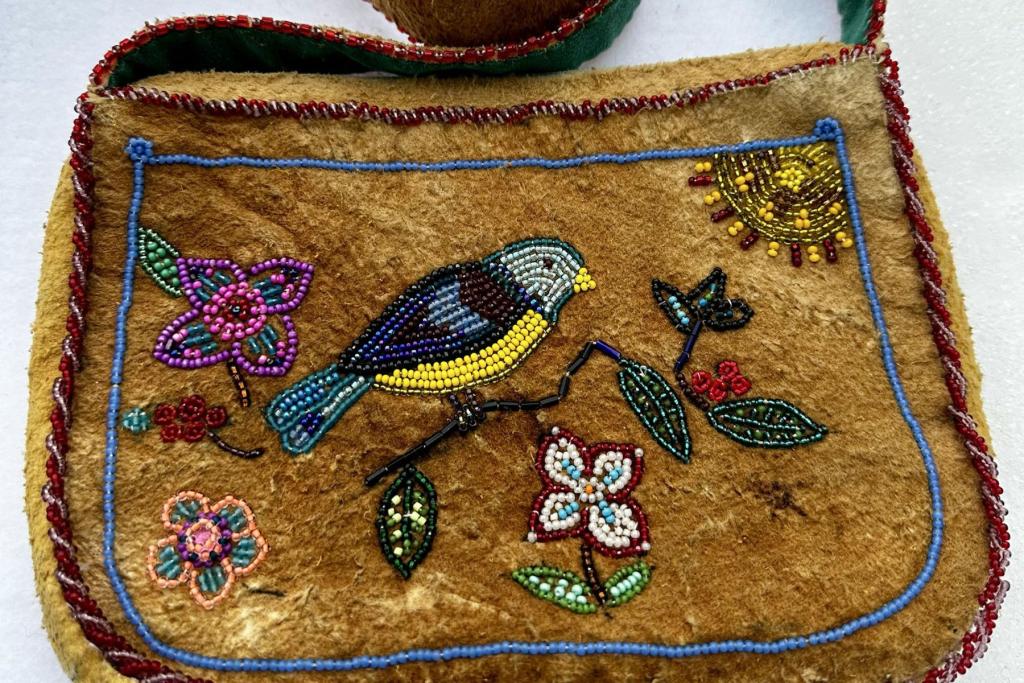
When I am beading or sewing, my hands know what to do, and my mind wanders. This is the repetitive, calming part. Some days I dream about designs. Some days I think about the people I miss. And sometimes I pause. In our beliefs, when a loved one passes, we put our beadwork down for a time. Even that is part of the relationship between the work and our lives. When you notice Athabascan beadwork on mittens, regalia pieces, jewelry, or even a dog jacket, know that you are looking at more than beads. You are looking at a living practice. It is a love language. It is a story stitched forward, one bead at a time.

New! Alaska Native Culture Guide
Immerse yourself in Alaska Native heritage and learn how to experience the living culture of the state's Indigenous peoples.