

An Insider’s Guide to Visiting Utqiaġvik
When people ask me what it’s like to live at the “top of the world,” I always smile. Utqiaġvik—my home—may appear on maps as a dot pressed against the Arctic Ocean, but to those who know it, it’s a place of warm hearts, Iñupiaq history, and natural beauty. Visitors arrive expecting cold winds, polar bears, and endless white. They leave remembering laughter, rich culture, and an Arctic landscape that glows gold in August.
If you’re planning a visit, let me offer an insider’s guide to experiencing Utqiaġvik in a way that honors this place and connects you to what makes it special.
Choosing the Best Time of Year to Visit
February – Come for Kivgiq, the Messenger Feast
If you want to experience the cultural roots of the North Slope Iñupiat, come in February, when Kivgiq—the Messenger Feast—takes place. It doesn’t happen every single year, but when it does, it transforms the entire community. Dance groups from across Alaska, Canada, and Greenland fill the stage with drums, movement, humor, and stories.
Kivgiq is more than a festival; it’s an opportunity to preserve and perpetuate our identity. Walking into the Barrow High School during Kivgiq feels like stepping inside our collective memory. The scent of caribou soup and the rhythm of drums mix with the imagery of handmade traditional parkas and atikluks. As a visitor, you are welcome—but you also become a witness to something ancient.
Dress warm. Even though February marks the sun’s return in Utqiaġvik, the weather can be unforgiving, with cold snaps dipping to –50°F or more. But the warmth of the celebration more than compensates.

June – Celebrate Nalukataq, Our Whaling Feast
Come the last two weeks of June, the light never leaves the sky, and the town gathers for one of our most important community celebrations: Nalukataq, the whaling feast. This event is hosted by the whaling crews who provide for the community and celebrates the successful spring bowhead whale harvest.
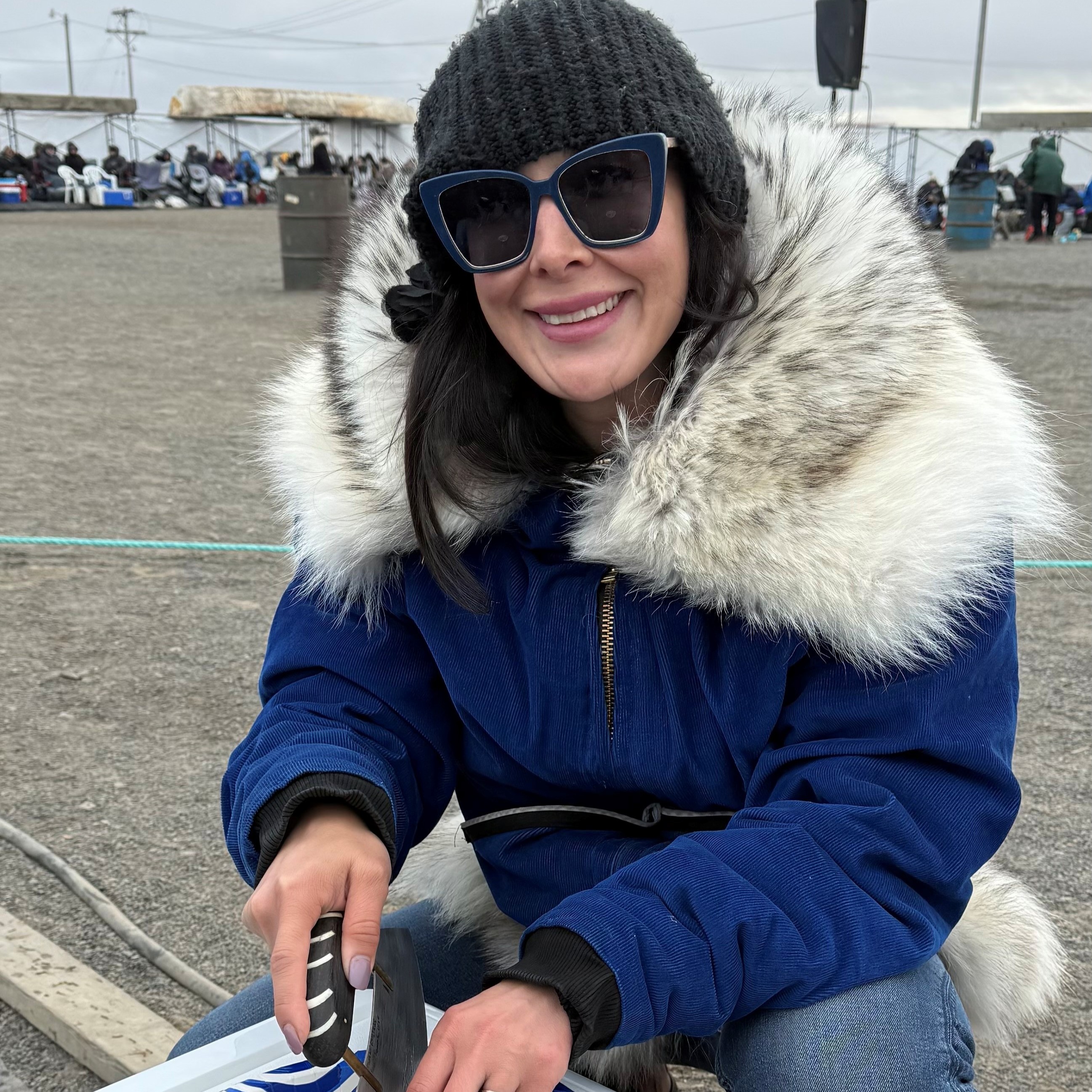
Imagine the endless Arctic sun shining on white canvas tents and children chasing each other around the center of the windbreak. Whaling crews will be working almost 24 hours carrying out the feast, dressed in their crew attire, and later in their finest handmade parkas. The successful crews share maktak, caribou soup, and seasonal delicacies like mikigaq or fermented bowhead meat and blubber. And, of course, there’s the blanket toss, where community members are launched on what could be considered an “OG trampoline” made from bearded seal skins—a tradition rooted in spotting whales from a higher vantage point.
Nalukataq isn’t a performance for tourists. It is truly for the community. But respectful visitors are welcome, and your presence is appreciated when you come with humility and respect. Bring sunglasses and warm clothes—the midnight sun at 2:00 a.m. can surprise you, along with the potential of snow in June.

August – The Best Weather & the Beauty of Arctic Fall
If you prefer milder temperatures and the stunning colors of the short Arctic autumn, visit in August. The tundra turns crimson and gold, and the air feels crisp. Migratory birds circle overhead, which make it one of the best times for bird watchers to visit. Locals savor the season before winter comes rushing back.
August is when Utqiaġvik is most accessible for travelers who want to explore, take photographs, and simply enjoy being outdoors without heavy gear. The Arctic Ocean is still icy cold (more on that later), but the coastline is alive with activity: seabirds, waves, and the soft hum of the wind across the flat horizon.
Where to Stay – Lodging Tips From a Local
Most visitors stay at the Top of the World Hotel, a good option if you want comfort, front desk staff, and quick access to town. But if you’re traveling with family—or if you want more space, privacy, and often a lower overall cost—consider one of the local Airbnbs.
Many Airbnbs in Utqiaġvik are modern, cozy, and equipped with the essentials you’ll want in the Arctic: full kitchens, living rooms, washers and dryers, and comfortable bedrooms. This is especially valuable if you’re traveling with children or staying more than a couple of days.
Insider Pro-Tip: Talk to Locals
Talk to locals wherever you go—at the grocery store, the senior center, the heritage center, or even at the beach.
Utqiaġvik is a place where community comes first. People share information generously—events, gatherings, sales, cultural activities, and small opportunities that never make it onto brochures or websites.
A friendly conversation can lead to:
- Tips on where to find the best local food
- Last-minute cultural events
- Community craft fairs
- Local guides for photography or tundra walks
In Utqiaġvik, relationships open doors.

The Best Stops for Photos & Exploration
1. The Whale Bone Arches
Just steps from the Top of the World Hotel, you’ll find one of the most iconic landmarks in Alaska: the whale bone arches, formed from the jawbones of a bowhead whale.
Visitors love the arches because they feel symbolic—marking the intersection of Arctic land, culture, and sea. Photographers love them because they frame the ocean and the endless sky.
Come during golden hour (yes, we still get one, even though it’s likely around midnight when the sun is closest to the horizon) and the bones glow warmly against the blue.

2. The Iñupiat Heritage Center
If you want to understand Utqiaġvik, you must stop at the Iñupiat Heritage Center. Inside, you’ll find exhibits of traditional tools, clothing, art, and whaling gear. But what makes the center special is the way it tells our story in our own voice.
Some days you might see a local artist sewing traditional clothing or carving baleen. Other days there might be a school group touring the center, sharing stories about growing up in an Alaska before the Alaska Native Land Claims Agreement of 1971.
Don’t rush your visit—walk slowly, listen carefully, and let the history speak.

3. Dip Your Toes in the Arctic Ocean
You can’t come to Utqiaġvik and not touch the Arctic Ocean. In summer, people tiptoe to the water’s edge, squeal, and run back laughing as the icy surf splashes their ankles. In winter… well, let’s just say it’s not recommended.
But in August, it’s almost a rite of passage for visitors. The water is shockingly cold, but the moment stays with you. You’ll remember the smell of the ocean air, the cry of seabirds, and the vast openness of the ocean stretching as far as the eyes can see.
Final Thoughts – Visit With Heart
Utqiaġvik is more than the northernmost city in the United States. It is a living community built on thousands of years of Iñupiat knowledge and resilience.
When you come here, come with respect. Listen more than you speak. Ask questions, but ask respectfully. Celebrate the traditions, support local artists, and take time to learn the names of the people who welcome you.
If you do that, Utqiaġvik will open itself to you—not just as a destination, but as a place of spirit, memory, and connection.
Welcome to the top of the world. I hope you love it as much as I do.


New! Alaska Native Culture Guide
Immerse yourself in Alaska Native heritage and learn how to experience the living culture of the state's Indigenous peoples.