

Where to Find the Best Birding in Alaska
Alaska’s incredibly diverse landscapes – from vast wetlands to coastal islands to rolling tundra – provide habitat for almost 500 species of birds, both resident and migratory. Each year, 5 billion birds migrate to Alaska to feed, breed, and nest. With birding hotspots located throughout the state, from our largest cities to remote islands, and birding festivals held spring through fall, Alaska is one of the top destinations in the U.S. for birding enthusiasts looking to combine excellent birding with stunning scenery and adventure.
Independent birding can be fun and rewarding, especially in easily accessible communities and national parks. For more remote locations, birding tours are available with professional guides who organize logistics and can help you identify rare species to add to your life list. There’s no shortage of stunning locations to catch a glimpse of Alaska’s birds.
Where are the best places for birding in Alaska?
Glacier Bay National Park
Over 280 species of birds have been identified in Glacier Bay National Park, viewable from locations like the gateway community of Gustavus and the Glacier Bay National Park Visitor Center to remote islands and inlets. The best way to view birds in Glacier Bay is by joining a full-day boat tour that travels deep into the park, or by joining a guided or unguided kayaking trip. If you’re looking for a more customized birding experience, you can charter a boat to visit top birding destinations.

Kenai Fjords National Park
Accessible from Seward, Kenai Fjords National Park is home to over 190 species of migratory and resident birds that are drawn to the area’s nutrient-rich waters and rocky shorelines and islands. Day cruises into the park are a popular option for birding, with longer cruises visiting the Chiswell Islands in the Alaska Maritime National Wildlife Refuge. Some operators offer birding-specific boat charters for small groups.

Denali National Park
A prime birding spot in the Interior region is Denali National Park, which provides habitat for over 160 species of birds from rufous hummingbirds to great horned owls. The majority of Denali’s birds are migratory, although a handful of hardy species like willow ptarmigan remain in the park when temperatures drop. The best way to view the park’s birds are on one of the bus tours that travel the Park Road. Tour buses are recommended for those who prefer narration and naturalist guides who can help point out specific species. Those looking for a more independent experience can join one of the hop-on, hop-off transit buses that allow you to disembark anywhere along the park road for hiking and birding.

Cordova
The small town of Cordova, located near the mouth of the Copper River Delta, is one of Alaska's most celebrated birding destinations, especially during spring migration. The Copper River Delta is a feeding stop for millions of shorebirds including western sandpipers, dunlin, and plovers as they make their way to Arctic breeding grounds each spring. This spectacular migration is celebrated annually at the Copper River Delta Shorebird Festival. Beyond the shorebirds, the surrounding wetlands and forests provide habitat for nesting trumpeter swans, sandhill cranes, and a variety of waterfowl, raptors, and songbirds. Cordova is easily accessible by commercial flights and the Alaska Marine Highway Ferry System.

Homer
Located on the shores of Kachemak Bay, Homer is a birding hotspot known for both its accessibility on the Alaska road system and abundance of migrating and resident species. The Homer Spit and surrounding tidal flats draw enormous concentrations of shorebirds during migration, while the bay itself hosts rafts of sea ducks, along with loons and grebes. Nearby wetlands and boreal forest provide habitat for trumpeter swans, sandhill cranes, and songbirds, while the coastal areas are home to a wide variety of seabirds. Each May, Homer hosts the largest birding festival in Alaska – the Kachemak Bay Shorebird Festival. Several local tour operators offer regularly-scheduled birding tours along with private charters that explore Kachemak Bay.

Pribilof Islands
The Pribilof Islands have been formally recognized as part of the Alaska Maritime National Wildlife Refuge and are often referred to as the “Galapagos of the North” due to their prominence as seabird nesting sites. Nearly three million seabirds nest on the islands and over 300 species have been reported here. Species including common murres, crested auklets, tufted puffins, and cormorants nest on the Pribilofs, making it one of the largest seabird colonies in the northern hemisphere. These remote islands are located in the Bering Sea, 300 miles from Alaska’s mainland. Guided multi-day birding tours, typically based out of St. Paul Island, are the best way to visit.

St. Lawrence Island
St. Lawrence Island is located in the Bering Sea, 164 miles west of Nome and 36 miles east of Russia. The small Yupik community of Gambell serves as the home base for visitors interested in birding here. The island is known for spectacular spring and fall migrations of nearly 3 million birds, including a large number of rarities. Most visitors to Gambell arrive on guided multi-day birding trips.

Kodiak Island
Kodiak Island provides habitat for more than 240 migratory and resident bird species. Bald eagles and harlequin ducks are commonly seen year-round, along with seasonal appearances from puffins, kittiwakes, geese, swans, and shorebirds. Spring and fall migrations bring the greatest diversity, but winter offers steady sightings of wintering sea ducks and shorebirds. Independent birders can rent a car and visit popular birding destinations like Fort Abercrombie State Historical Park, Buskin River State Recreation Area, and Women’s Bay. Birding day trips and multi-day guided birding excursions are also available.

Adak Island
Adak Island, located in the Aleutian Islands and part of the Alaska Maritime National Wildlife Refuge, is legendary among birders as one of North America's premier spots for finding Asian vagrants blown off course across the Bering Sea. Its remote location and treeless, windswept tundra create a unique stopover for species rarely seen elsewhere on the continent, including whooper swans, smew, Mongolian plovers, and various Siberian passerines. Spring and fall migrations offer the best birding opportunities. Despite its remote location, Adak offers infrastructure and accommodations to make independent birding possible. However, those who prefer a guided experience can book multi-day birding trips.

Nome
Nome offers some of the most accessible Arctic birding in North America, thanks to multiple daily commercial flights from Anchorage. Nome’s 250-mile gravel road system fans out across the Seward Peninsula, providing unparalleled access to diverse habitats. Late spring through early summer is the prime season, when around 200 species including shorebirds, waterfowl, and songbirds arrive to nest in the tundra, wetlands, and coastal areas. Birds can be seen right in town, while guided day trips and multi-day trips are available to explore popular destinations along the Nome road system.

Utqiaġvik
Utqiaġvik, perched on Alaska's northernmost point along the Arctic Ocean, is a bucket-list destination for birders seeking Arctic species found almost nowhere else in the U.S. The coastal areas and surrounding tundra provide habitat for all four species of eiders, snowy owls, Sabine’s gulls, and a variety of Arctic-nesting shorebirds during the brief summer season. Utqiagvik is the only place in the U.S. where birders can spot the elusive Ross’s gull, which migrates through the area in late September and early October. Guided multi-day birding trips are available here, primarily in spring and fall. Day tours highlight local landmarks and tundra wildlife viewing. Audubon Alaska has created the Utqiagvik Birding Trail, highlighting the top ten birding spots in Utqiagvik.

Birding in Alaska’s Biggest Cities
Visitors to Alaska don’t have to go far off the beaten track to find excellent birding. Alaska’s three largest cities - Anchorage, Fairbanks, and Juneau - each offer excellent easily accessible birding opportunities.
Birding in Anchorage
In Anchorage, Alaska’s largest city, popular birding destinations include Potter Marsh, the tidal flats along the Tony Knowles Coastal Trail, and Westchester Lagoon. Audubon Alaska has created the Anchorage Birding Trail, which highlights 35 birding destinations in the Anchorage area and which species can be spotted there.

Birding in Fairbanks
The hub of Interior Alaska, Fairbanks offers excellent birding in the area’s boreal forests, wetlands, and lakes, particularly at Creamers Field Migratory Waterfowl Refuge and Tanana Lakes State Recreation Area. Every August, the town celebrates the fall migration of thousands of sandhill cranes at the Tanana Valley Sandhill Crane Festival.

Birding in Juneau
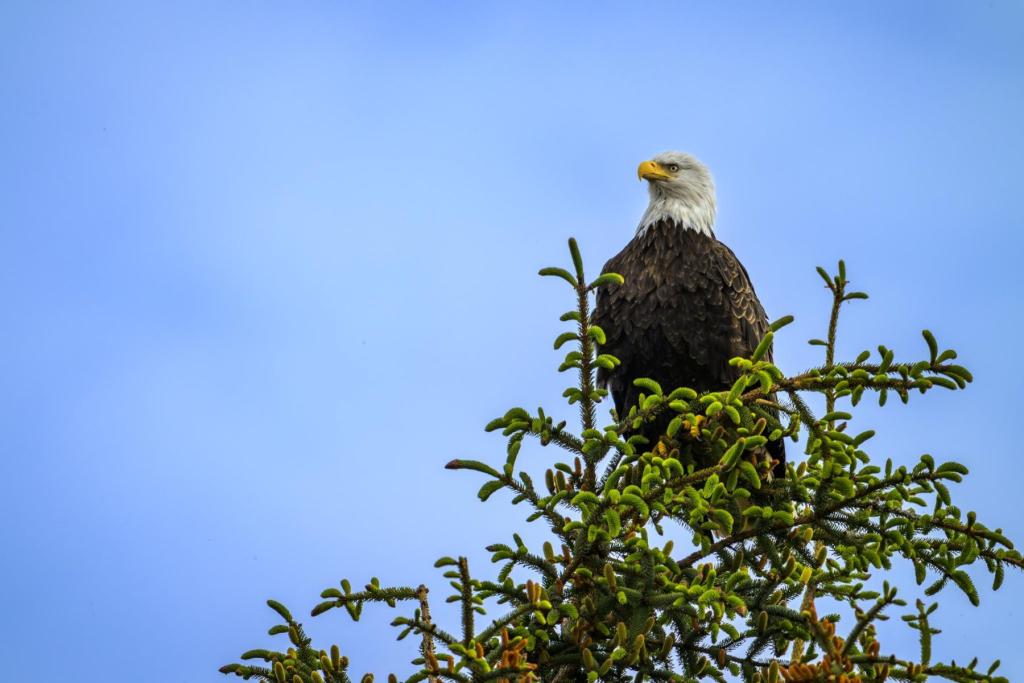
Alaska’s capital city, Juneau, offers easily accessible birding along coastal areas and in the temperate rainforest of Tongass National Forest. The Mendenhall Wetlands State Game Refuge and nearby Eagle Beach State Recreation Area are prime spots for waterfowl, shorebirds, and bald eagles, while the surrounding forest supports species like varied thrush, pacific wren, and sooty grouse.
When is the best time for birding in Alaska?
The best time for birding in Alaska is April through September, but specific timeframes vary depending on where you are visiting and which species you hope to see. Spring (early April through early June) and fall (August and September) see massive migrations throughout the state, with some species settling in Alaska for the summer season. In the fall, the vast majority of birds in Alaska begin their migrations south. About 100 resident species spend their winters in Alaska.
If you’re visiting during winter when bird activity is quieter, head to the Alaska Zoo and the Bird Learning and Treatment Center in Anchorage, the Alaska Wildlife Conservation Center near Portage, the Alaska Sealife Center in Seward, the Alaska Raptor Center in Sitka, and the American Bald Eagle Foundation in Haines to learn more about Alaska’s bird species and see them up close.

Birding Festivals in Alaska
Alaska’s birds are celebrated at a number of birding festivals throughout the year. These fun and educational festivals are planned around peak migration times and feature speakers, birding field trips, and community events.
April
- Alaska Hummingbird Festival, Ketchikan
- Stikine River Birding Festival, Wrangell
- Spring Migration Celebration, Fairbanks
May
- Copper River Delta Shorebird Festival, Cordova
- Kachemak Bay Shorebird Festival, Homer
- Yakutat Tern Festival, Yakutat
- Migration Celebration, Haines
June
August
- Tanana Valley Sandhill Crane Festival, Fairbanks
November
- Alaska Bald Eagle Festival, Haines

Where to Find an Alaska Birding Guide
Tour operators offer multi-day guided birding excursions to some of the more remote birding locations in Alaska. These guided experiences are the best option for birding in the more logistically complicated birding areas as they coordinate complicated transportation, accommodations, and meals that would be challenging to organize independently. Birding and wildlife day tours are available from coastal towns like Seward, Homer, Juneau, Kodiak, and Gustavus. The Audubon Society of Anchorage hosts events throughout the year including bird walks, field trips, birding contests, presentations, and birding trips. Free guided nature walks are offered in many of Alaska’s national parks and public lands.

Alaska: AKA Your Next Adventure
Where will your Alaska adventure take you? Order our Official State of Alaska Vacation Planner and plot your course.